Water Heater Installation in Augusta, ME
Tell us about the house, and a licensed contractor who covers Kennebec County will get in touch.
Tell us about the job
It takes about a minute.

A new water heater here has to handle a long cold season and the chance of losing power
Augusta homes need heat nine months of the year, September through May, and winter nights average 13°F. A water heater here is working through a long stretch of cold weather, not just a few weeks of it.
More than half of Maine households lost power for 24 hours or more in 2024, and Kennebec County has seen 40 winter storms and 55 damaging wind events over the past ten years. A gas water heater with a standing pilot will keep making hot water through an outage. One with electronic ignition will not light until the power comes back. Worth knowing before you pick a replacement or add a new unit.
- 13°F
- the average winter night, and colder incoming water means longer heating
- 9 months
- September through May, the months homes here need heat
- 54%
- of Maine households lost power for a day or more in 2024, and a heater with an electric element or electric ignition stops without it
NOAA nClimDiv, 1991–2020 normals
- How do I know it's time to replace my water heater?
- Look at the age first. Most tanks wear out after enough years of heating and reheating, and once a tank starts failing, a repair just delays the next one. Rust colored water from the hot tap, a tank that's damp or weeping around the base, or a pop and rumble sound when it heats are signs the tank itself is going, not just a part inside it. If the problem is a bad heating element or thermostat and the tank is still sound, that's usually worth fixing. If the tank is old and leaking, replace it before it fails outright and floods the area around it.
- Should I switch to a tankless water heater?
- It depends on what you want out of it, not on your old tank being broken. A tankless unit heats water only when you open a hot tap, so you don't pay to keep a tank of water hot all day, and you don't run out partway through a long shower with two people back to back. It also takes up a lot less space than a tank, which matters if yours is in a closet or tight utility area. The tradeoff is that installing one usually means changes to the gas line, venting, or electrical, since tankless units draw more power at the moment they fire than a standard tank does. A contractor can look at your home and tell you what that would take.
- What changes when you install a tankless water heater?
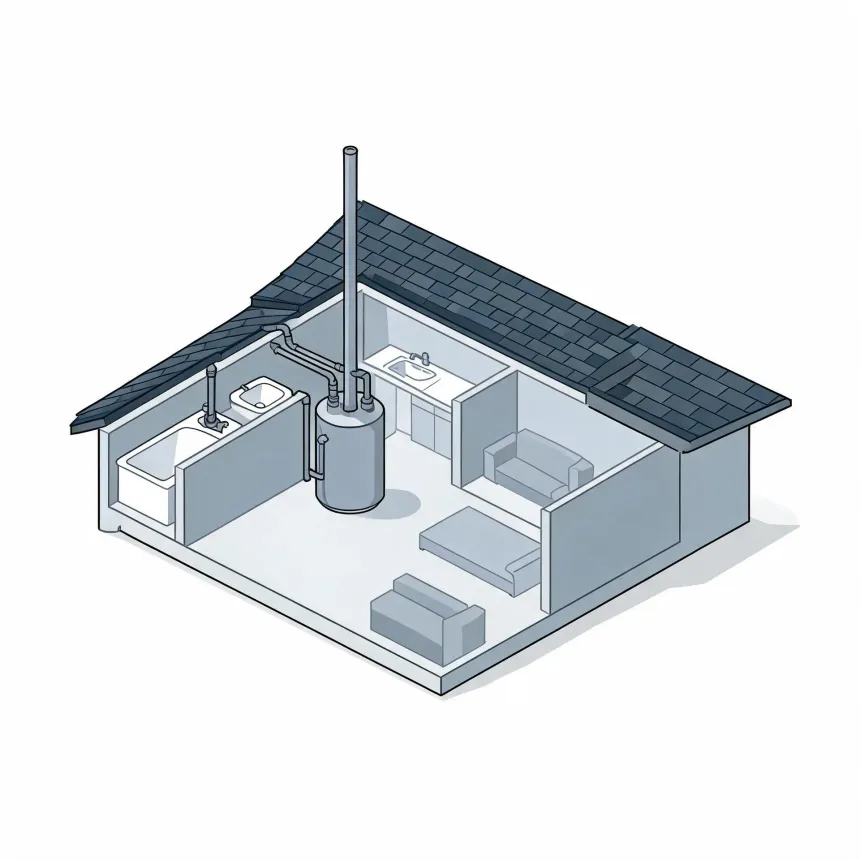
- The unit itself is small, mounted on a wall instead of standing on the floor, so it frees up the space a tank used to sit in. To run it, the gas line often needs to be sized up, since a tankless heater pulls more gas in the moment it's firing than a tank does spread over the day. The venting changes too, since most tankless units vent through PVC pipe out a wall or roof instead of the metal flue a standard tank uses. None of this means you can't do it in your home, but it does mean the installation is more involved than swapping one tank for another, and it's worth having a contractor walk through your specific setup before you decide.