Without a humidifier
This is what a furnace looks like on its own, venting through the PVC pipe and pushing air out through the ductwork above it. It heats the house fine. It just doesn't put anything back into that air once the moisture is gone.

Finding a pro stops being your job
Winter air in Maine gets dry enough to crack skin and static up your socks, so it's fair to wonder if your oil furnace needs a humidifier attached to it. The answer depends on your house and how dry it actually gets inside, not just the thermometer outside. This page walks through what decides it, and what's involved in getting one installed. Send the form and a local contractor takes it from there.
Let a pro reach outMost homes in Maine with a furnace do benefit from one. Oil furnaces, like any forced air heat, don't add moisture back into the house, and when outside air near freezing or below gets pulled in and heated, its relative humidity drops hard. That's what's behind the dry skin, the static, the cracked wood trim. A whole house humidifier mounted on the furnace adds moisture back into the air as it moves through the ducts, so the house holds a comfortable level all winter instead of drying out. Whether you need one depends less on the cold outside and more on how your house holds onto moisture once it's heated. Some homes run a space heater or two humidifiers and still feel dry by February. If static shocks, dry sinuses, or cracked caulk are a pattern for you by midwinter, a furnace-mounted humidifier is built to fix exactly that.

This is what a furnace looks like on its own, venting through the PVC pipe and pushing air out through the ductwork above it. It heats the house fine. It just doesn't put anything back into that air once the moisture is gone.

A humidifier mounts to the ductwork near the furnace and ties into a water line, so it adds moisture to the air as it moves through. In an older basement like this one, with stone walls and gas lines already running to the unit, a contractor can usually work the unit in without much trouble.




That's the itchy skin and shocks at the doorknob. Wood floors and trim can shrink and gap too, which a humidifier helps prevent.
It draws off the furnace's own heat cycle, so it doesn't add a separate appliance to run or watch, just steady moisture while the furnace fires.
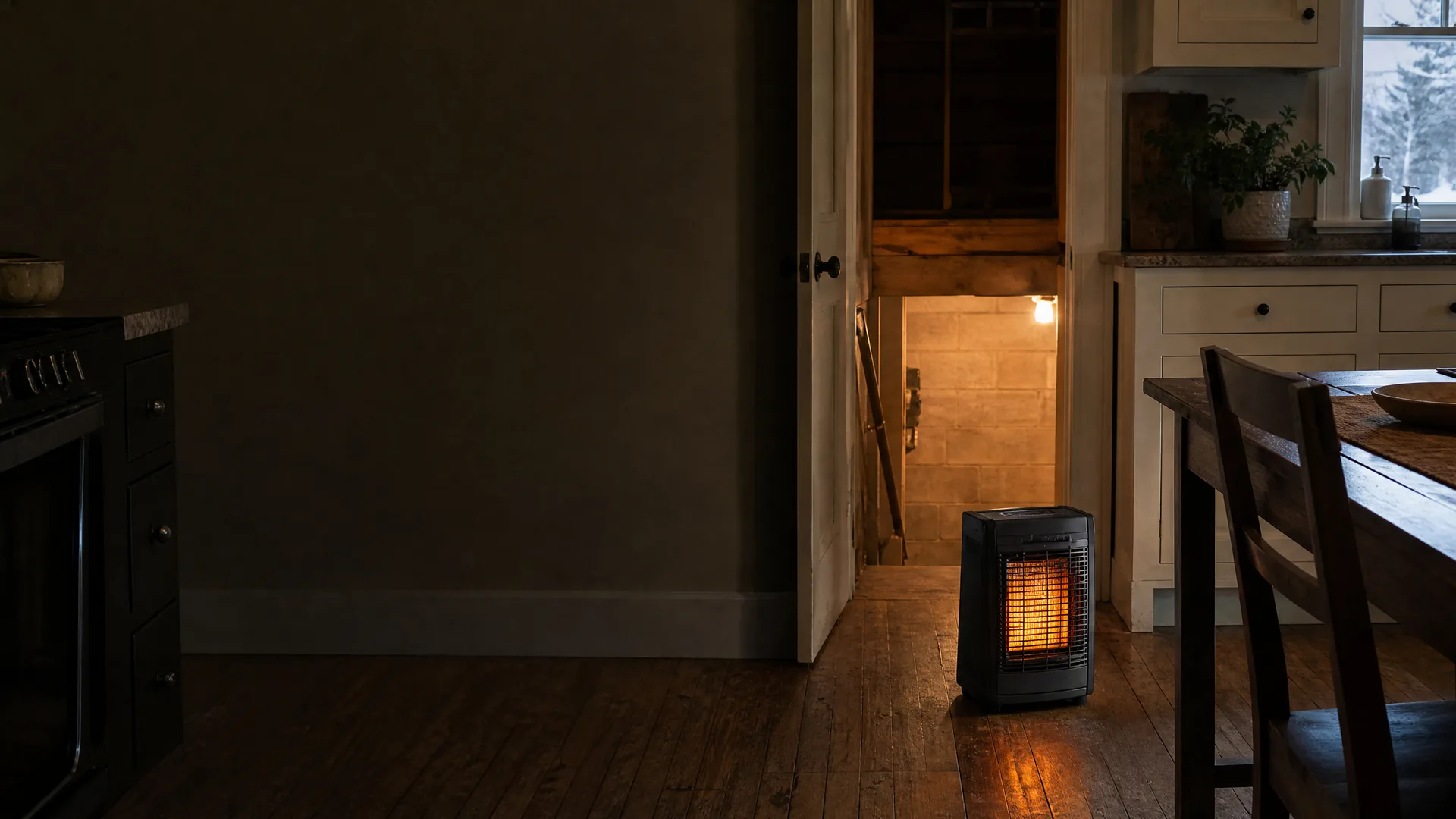
The thermostat said 68 but it didn't feel like it. You'd caught the chill coming down the stairs before the coffee even finished, so the space heater came out again, set by the table where your daughter eats breakfast. The basement door stood open behind it, the way it does most mornings now, letting whatever warmth the furnace makes drift up past the oil tank instead of staying put. Outside, the thermometer read 22. Your knuckles had that tight, papery feel they get every February. You rubbed lotion into them while the kettle ran, already thinking about the static that would jump off the banister the second you touched it.
If you've read this far, you already know whether your house is one of the dry ones. Maybe you've had the same space heater out every January, or you've watched the trim pull away from the wall by February. Deciding you want one installed is the easy part. Matching an oil furnace's plenum and trunk line to the right humidifier, and wiring it so it tracks with the blower instead of running on its own, is a job for someone who's done it on furnaces like yours before, not a guess. Maine has enough oil-heat houses that a local contractor has likely set up this exact pairing more than once this season and knows which models hold up with hard water and which don't. Send the request and that search becomes someone else's job instead of yours, and it goes to one contractor who already knows this equipment, not a handful competing for your callback. You can stop thinking about the dry air once you've sent it.
A humidifier set too low still leaves the air dry enough to notice. One set too high will fog your windows and leave water marks on the sills before you catch it.
Getting the setting right for a Maine winter takes a little adjusting as the outside temperature drops, not a one-time dial turn. Whoever installs it should show you how to move it as the cold sets in.


Your furnace's blower pushes heated air through the ductwork.
Water line feeds the humidifier mounted on the supply plenum.
A damper opens and lets heated air pass through the humidifier.
The humidifier pad or drum absorbs water as air flows past it.


Average overnight lows around 13°F mean your furnace is running long, steady stretches most winter nights. That's a lot of cold, dry outside air getting pulled in and heated, which is exactly the air that dries out your house fastest.
NOAA nClimDiv 1991-2020 county normals weighted by homes
There's no single answer that fits every house on your street, but there is a way to find yours. Your oil furnace heats the air without adding anything back to it, and Maine winters hand it cold, dry air to work with night after night. What happens next depends on your house. A newer, tighter home traps the moisture from cooking and showering and holds onto it, so the air inside stays livable even through January. An older, drafty one loses that moisture as fast as the furnace makes heat, and that's when you start noticing it: the shock off the doorknob, the gap opening up in the hallway trim, skin that won't stop feeling tight. If none of that sounds like your house, there's nothing here that needs fixing. If it does, the fix is a humidifier mounted on the supply plenum, feeding off a water line, letting the blower's own airflow carry moisture through the ductwork instead of just heat. Getting it set right matters too. Too low and you won't notice a difference. Too high and you'll find it on the windows before you find it anywhere else, which is why the setting has to move with the outside temperature through the winter rather than sit on one number. A contractor who installs and services these through a full Maine winter can look at your house in person and tell you which side of this you're on, and what it would take to fix it.


Done looking for a furnace pro
Your request stays with one local pro.