







Oil furnace or heat pump for a Maine home

Skip collecting and comparing quotes for the new furnace.

Skip the calls

Most homes in Maine that have an oil furnace do better keeping it and adding a heat pump alongside it, rather than replacing it outright. A heat pump handles the mild shoulder months cheaply and takes the load off the furnace, but Maine winters get cold enough that a heat pump alone struggles to keep up, and oil power here is some of the priciest in the country if you lean on electric resistance backup instead. The furnace stays as backup for the coldest stretches, running the way it always has. This setup, called a dual fuel or hybrid system, means you switch between the two depending on the temperature outside. Replacing the furnace entirely with a heat pump works for some homes, but it depends on how the house is insulated and how the ductwork is set up, which is worth having someone look at directly. Either way, getting the sizing and setup right matters more than which equipment you pick.

A man with grey hair and stubble in a dark sweater sits on a grey sofa indoors, looking off to the side, with a potted plant and a sunlit window behind him.
A man with gray hair, a beard and glasses, wearing a dark green sweater, sits on a gray sofa in a sunlit living room with a potted plant, table lamp and wooden sideboard behind him.
A middle-aged man with graying hair and a short beard sits on a blue sofa in a living room, looking toward a window, with a bookshelf, lamp and framed picture in the background.
A man with graying curly hair and a dark green sweater sits on a gray sofa in a sunlit living room, looking off to the side, with a framed picture, shelving, an armchair and a window with sheer curtains behind him.

Oil Furnace Alone or Add a Heat Pump

Keep the oil furnace

  • It already handles the coldest stretches of a Maine winter, down below zero when a heat pump alone would struggle.
  • Oil heat doesn't depend on the grid staying up, which matters during a winter storm that knocks out power.
  • You've likely already got the tank, the lines and the venting in place, so there's nothing new to run.
  • A furnace running on its own through January and February keeps pulling fuel at whatever oil costs that week.
  • An aging furnace still needs its burner and heat exchanger checked yearly whether or not a heat pump joins it.

Add a heat pump

  • It covers the shoulder months, September and October, April and May, for a fraction of what oil costs to run.
  • It also gives you central air for summer, which a furnace alone never could.
  • It takes the load off the furnace during the milder stretch, so the furnace burns less oil over the year.
  • Electricity in Maine runs expensive, so a heat pump's savings depend on how little oil it's replacing, not just on efficiency alone.
  • Installing one means finding ductwork or wall space for the indoor unit and a spot outside for the compressor.
  • On the coldest nights it still leans on the furnace, since most heat pumps lose capacity as the temperature drops.
A gray residential furnace with two panel doors stands against a plain light wall in a concrete-floored room, connected to metal ductwork and white and copper pipes.

Why the pairing works in Maine

A heat pump moves heat instead of burning fuel to make it, so it uses a fraction of the power a baseboard or resistance system would. In a Maine fall or spring, when outdoor temperatures sit in the 40s and 50s, it can carry the whole house on its own. Below that, its output drops and the oil furnace is better suited to the work. Running both lets each one do the part it's actually good at.

A gray high-efficiency furnace with white PVC venting pipes stands against a plain wall in a basement, connected to sheet-metal ductwork on a concrete floor.

What a cold-climate heat pump can do

Standard heat pumps lose most of their capacity well above zero, which is why Maine homes have leaned on oil for the hard months. Cold-climate models are built differently and keep producing useful heat down into the single digits or lower, depending on the unit. That changes where the crossover point sits between the two systems. A contractor who installs these year-round in Maine will size that handoff to your house and set the controls so the switch happens on its own.

Why does the oil bill keep climbing every winter

You notice it most in January and February, when the burner seems to kick on every few minutes and the oil tank gauge drops faster than it used to. Maybe you're filling the tank more often than you did a few years back, or the furnace runs long stretches just to hold the house at the same temperature. Some of that is just a cold snap. But a furnace working that hard, that often, burns through fuel at a rate that adds up fast at today's oil prices. If the furnace is doing all the work through October and November too, months that don't need that kind of heat, you're paying oil prices for jobs a heat pump could do for less.

A gray high-efficiency furnace in a basement with white PVC vent pipes, sheet-metal ductwork, copper and black piping, a condensate pump, and insulated walls above a concrete floor.

Furnace and heat pump together

The oil furnace stays tied into the same ductwork, running the burner, the flue, and the condensate line as before. A heat pump installed alongside it picks up the mild stretches so the burner sits idle more of the year. You still have the furnace for the cold snaps it was built for.


A beige residential furnace stands on a concrete basement floor beside galvanized sheet-metal ductwork, a round flue pipe, copper gas piping, and a PVC condensate line, with a wood-paneled wall at right.

Furnace left on its own

An older oil furnace carries the full load every month, from the first frost through the last cold night. The burner cycles more, the tank empties faster, and the flue and gas lines do the same work they've always done with nothing sharing the job. Nothing changes until the furnace itself fails.

Winter nights average 13°F statewide

On a January night your furnace is working against a statewide average of 13°F outside, not some mild chill. That's the stretch where oil alone earns its keep and a heat pump would struggle to keep up. A properly sized furnace matters more here than almost anywhere else in the country.

NOAA nClimDiv 1991-2020 county normals weighted by homes

Have someone size the heat pump right

A heat pump sized for a Maine home has to be matched to your furnace, your ductwork, and how much of the load you actually want it carrying before the burner takes over. Get the sizing wrong and you end up with a unit that runs constantly in the cold and still costs more than it should, or one that can't handle the shoulder months it was supposed to take off the furnace. A local installer who works on these pairings every season knows what capacity actually holds up outside, not just on paper. That's the piece worth getting right the first time, since it's harder to fix after it's installed than before.

Skip calling around for quotes

Finding someone to size and install a heat pump alongside an existing oil furnace usually means calling several companies, explaining your setup to each one, waiting on separate quotes, and trying to judge who actually knows how the two systems should work together. Requesting help here sends your details to one licensed Maine contractor instead, someone who installs this pairing regularly and already knows what to ask about your furnace and ductwork. You explain your situation once. No juggling multiple callbacks, no sorting through quotes that don't match up, no repeating yourself to a different voice each time.

A gray furnace with two access panels stands on a concrete basement floor beside sheet-metal ductwork, with pipes, flexible conduit and an electrical box on the concrete wall to the left.
Before you get your furnace installation
A gray high-efficiency furnace stands on a concrete basement floor beside galvanized sheet-metal ductwork, white PVC vent pipes, copper and black piping, and unfinished wood stud framing.
After you get your furnace installation
An unfinished basement with a concrete floor, pink insulation on one wall, exposed joists, galvanized sheet-metal ductwork, PVC vent pipes, and a tall gray furnace with attached gas and electrical lines.

Skip calling around

Your request goes to one pro, not a list of companies.

Fill out one short form instead of calling around.

Answer a few questions

It costs nothing to send, and you don't have to hire anyone.

A closed silver laptop and a ceramic mug of dark coffee sit on a wooden table in front of two chair backs, with a kitchen counter, tiled backsplash, wooden cutting boards, a vase of greenery and a potted plant by a window behind.

How the two systems hand off the heat

A dual fuel setup runs on a thermostat that checks outdoor temperature against a setpoint called the balance point. Above that temperature, the heat pump's compressor runs and the burner stays off. Once the outdoor temperature drops past the balance point, the thermostat locks out the heat pump and fires the furnace instead. The switch happens on its own, mid-storm or at 3 a.m., without anyone touching a dial.

Where that balance point gets set is the part worth getting right, and it takes someone who's done this kind of changeover before to set it well. Set it too low and the heat pump keeps running on days it should have handed off, pulling in a lot of electricity to do what the furnace would do cheaper. Finding a contractor who installs this exact pairing, rather than calling around to a handful of companies who each need the layout explained from scratch, is most of the work of getting it set up right.

A living room corner with a beige upholstered armchair holding navy and striped cushions, a small round wooden side table with a carved bowl and a potted green plant, a framed landscape picture on a pale wall, built-in shelving, and a curtained window.
  1. The thermostat compares outdoor temperature to the balance point.

  2. Above the balance point, the heat pump's compressor starts and runs alone.

  3. The furnace burner stays off while the heat pump covers the load.

  4. Below the balance point, the control board signals the burner to fire.

What sets the balance point for my system?

You've seen how the thermostat switches between the heat pump and the furnace burner once outdoor temperature crosses the balance point. What you're really asking is who decides where that line sits, and whether it's a fixed number or something that gets set for your house in particular.

The installer sets it, based on your heat pump and your furnace output

The balance point isn't built into the equipment. It's a number the installer programs into the thermostat or control board after looking at what your heat pump can put out as the air gets colder and what your furnace is rated to cover. A heat pump loses capacity as the temperature drops, so the balance point marks where its output falls below what the house needs and the burner has to take over. Set it too high and the furnace runs more than it should. Set it too low and the heat pump struggles on the coldest days. Getting that number right takes someone who's sized both systems against each other, not just installed one.

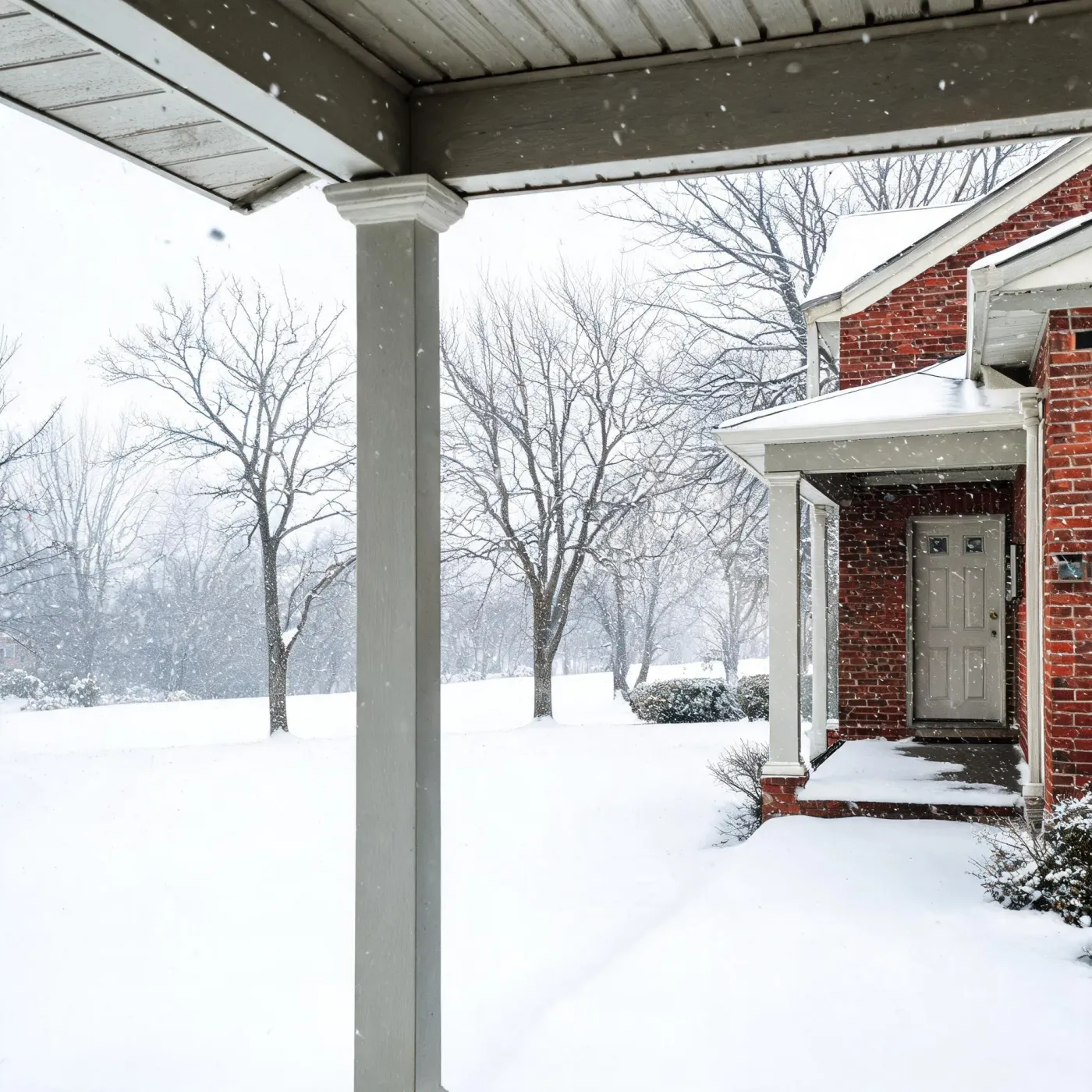
View from under a covered porch with a white column toward a red brick house entrance with a gray door, surrounded by deep snow, bare trees, and falling snowflakes.

The 13°F figure already shown above is a statewide average, not the coldest it gets. On a lot of Maine nights the thermometer sits well below that, and your furnace is what keeps the house livable through it. That's the burner cycling on and off most of the night instead of a few times an hour, and it's why the oil tank gauge moves the way it does in January. A heat pump can take the edge off the shoulder months, but nights like these are the furnace's job alone, and it has to be sized and installed to handle them, not just the mild stretches in between. Source: NOAA statewide winter averages.

NOAA nClimDiv 1991-2020 county normals weighted by homes

A woman with shoulder-length brown hair wearing a beige knit cardigan sits in a gray upholstered armchair near a window, looking off to the side with a slight smile, with bookshelves blurred in the background.
A woman and a sleeping child wrapped together in a cream knitted blanket on a couch, with a potted plant, framed photo and lit lamp in the background.

Where this leaves you

  • Keeping the oil furnace and adding a heat pump alongside it is the setup that fits a Maine winter, not a straight swap.
  • The furnace carries the coldest nights below the balance point, and the heat pump carries the rest of the year on far less power.
  • Sizing the heat pump to your ductwork and your furnace's output is what decides whether that handoff actually works.
  • A contractor who installs this pairing in Maine homes every season has already seen what goes wrong when the sizing or the balance point is off.
  • Getting matched with one licensed local installer means working through the details once, not fielding separate calls from several companies.
  • You end up with a straight answer about your own furnace and ductwork, from someone who already knows what Maine winters do to this kind of system.

Your furnace stays. A heat pump installed alongside it picks up everything above the balance point, and the burner takes over once outdoor temperature drops below it. That's the whole decision. What determines whether it works well in your house is sizing: the heat pump matched to your ductwork and to what your furnace already puts out, so the handoff happens where it should instead of leaning on the burner too early or asking the heat pump to cover more than it can.

Getting that sizing right is a job for someone who installs this pairing in Maine homes every season, not a one-size job. A contractor who works on dual fuel systems here has already run into the ductwork that's too small for the heat pump side, the balance point set wrong for a particular house, the furnace that was oversized to begin with. That's the kind of thing you want caught before installation, not after.

When you get matched through this page, it's with one licensed installer local to you, not a handful of companies calling about the same job. You explain your furnace, your ductwork, and what you're trying to fix once, to someone who already knows what a Maine winter does to this kind of system. From there you get a straight answer about your own house: what size heat pump fits, where the balance point should sit, and what the install involves given what you already have running.

A gas furnace with attached PVC and metal piping and sheet-metal ductwork stands on a concrete pad in a dim unfinished basement with concrete walls and exposed floor joists.

Describe it once

One installer gets your project, so there's no bidding war over it.

New system or replacementFurnace or heatingMaine
Step 1 of 2

What ZIP code is the job in?