
HVAC Installation in Farmington, ME
Tell us about the house, and a licensed contractor who covers Franklin County will get in touch.
Tell us about the job
It takes about a minute.

Farmington asks a lot of a heating system
Winter nights here average 8°F from December through February. That is the load a furnace or heat pump has to meet, night after night, not an occasional cold snap. Homes in this area need heat from September through June, ten months of the year. Whatever gets installed spends most of the year working, not sitting idle.
Summers stay easy on a system. Afternoons here average 73°F, so cooling is a small part of the job. Fuel oil heats 52% of homes in this area. Power loss is a real risk too. In Maine, 54% of households went at least 24 hours without power in 2024, and the region has logged 97 winter storms and 34 damaging wind events over the last ten years. A new system should come back on by itself once power is restored, without someone having to relight it by hand.
- 10 months
- September through June, your system heats
- 8°F
- the average winter night it heats against
- 73°F
- the average summer afternoon it cools against
- When should I replace my HVAC system?
- Once your furnace or air conditioner is breaking down more than once a season, or a contractor tells you a repair costs close to what a new system would run, it is time to replace it. Age matters too. A furnace working hard for ten months a year here, the way heating systems in Farmington do, wears out its parts faster than one that only runs a few months. If your furnace is old enough that parts are getting hard to find, do not wait for it to fail on the coldest night of the year to start looking.
- Should I replace my furnace and air conditioner at the same time?
- If both are near the end of their life, replacing them together is worth asking a contractor about, since matching a new furnace to an old air handler or coil can cause problems down the road. That said, homes in Farmington need almost no cooling, with summer afternoons only reaching 73°F, so the air conditioner here does a fraction of the work the furnace does. Many homes here may not need central air at all. Talk to a contractor about what your specific setup needs before deciding to replace both at once.
- What happens during an HVAC installation?
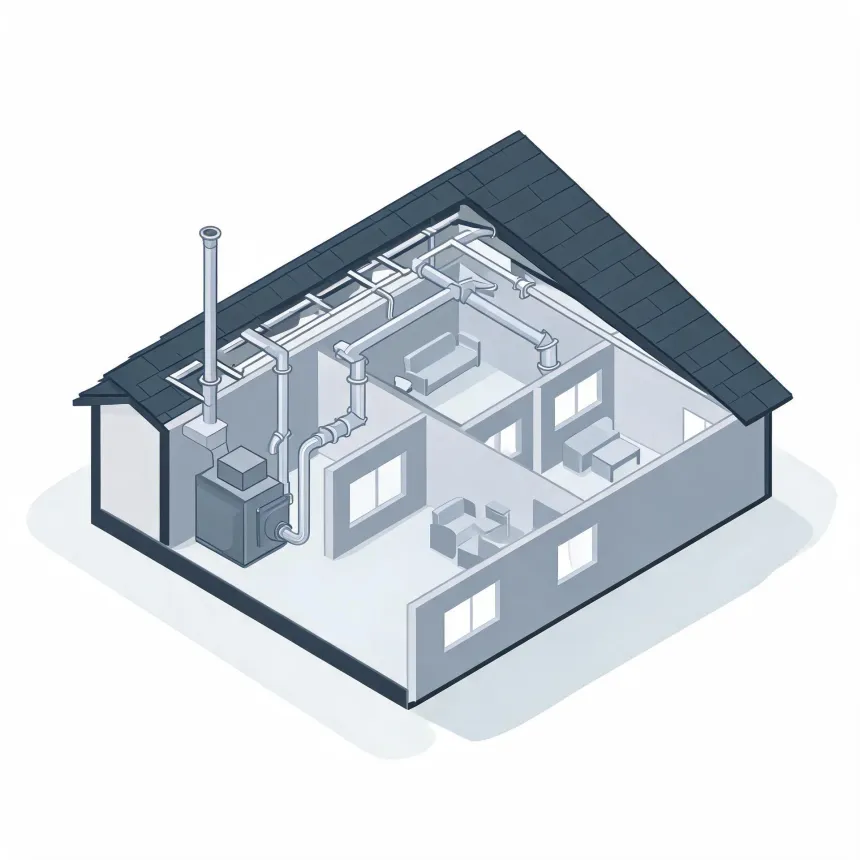
- A contractor removes the old equipment, sets the new furnace, air conditioner or heat pump in place, and connects it to the ductwork, gas or electric lines, and venting your home already has. They will check that the ducts are sized right for the new unit, since a furnace pushing air through the wrong size ducts will not heat evenly. Once it is running, they test it, check for leaks, and walk you through anything you need to know about operating it. The exact steps depend on what equipment you're replacing and how your home is set up, so a contractor can walk you through what your installation will involve.