Mini Split Installation in Belfast, ME
A new system here will heat from September through May and cool from July through July every year. Tell us about the house, and a licensed contractor who covers Waldo County will get in touch.
Tell us about the job
It takes about a minute.
Belfast asks a mini-split to heat nine months a year
Winter nights here average 14°F from December through February. A mini-split installed in Belfast has to pull heat out of air that cold for months at a stretch, not just take the edge off a chilly evening. Summer only asks for cooling in July, when afternoons average 76°F, so the bigger job by far is heat.
Over half of homes here still heat with fuel oil, and a new mini-split has to hold up as the main source of heat or work alongside a furnace through nine months of the year. Any unit installed new has to meet the federal minimum of 14.3 SEER2 for cooling and 7.5 HSPF2 for heating, since a ductless heat pump falls under the same split-system standard as any other. The region has recorded 79 winter storms and 34 damaging wind events over the past ten years, and in Maine, more than half of households lost power for at least a day in 2024. A mini-split that comes back on by itself once power returns matters here.
- 9 months
- September through May, your system heats
- 1 months
- July through July, it cools
- 14°F
- the average winter night it heats against
- 76°F
- the average summer afternoon it cools against
NOAA nClimDiv, 1991–2020 normals
- Is a mini split worth it?
- For most Belfast homes, yes, but it depends on what you are pairing it with. Winters here run cold, down to 14°F on average overnight from December through February, and a mini split has to work hardest exactly when it's coldest out. A good cold-climate model still delivers heat at those temperatures, but over half the homes in this area heat with fuel oil, so a mini split usually makes sense as a way to cut oil use and cover the shoulder months, not necessarily as the only heat source. Cooling load here is light, only July really counts as summer, so the savings case leans more on heating than air conditioning. A contractor can look at your current system and tell you where a mini split fits best.
- How many rooms can a mini split cover?
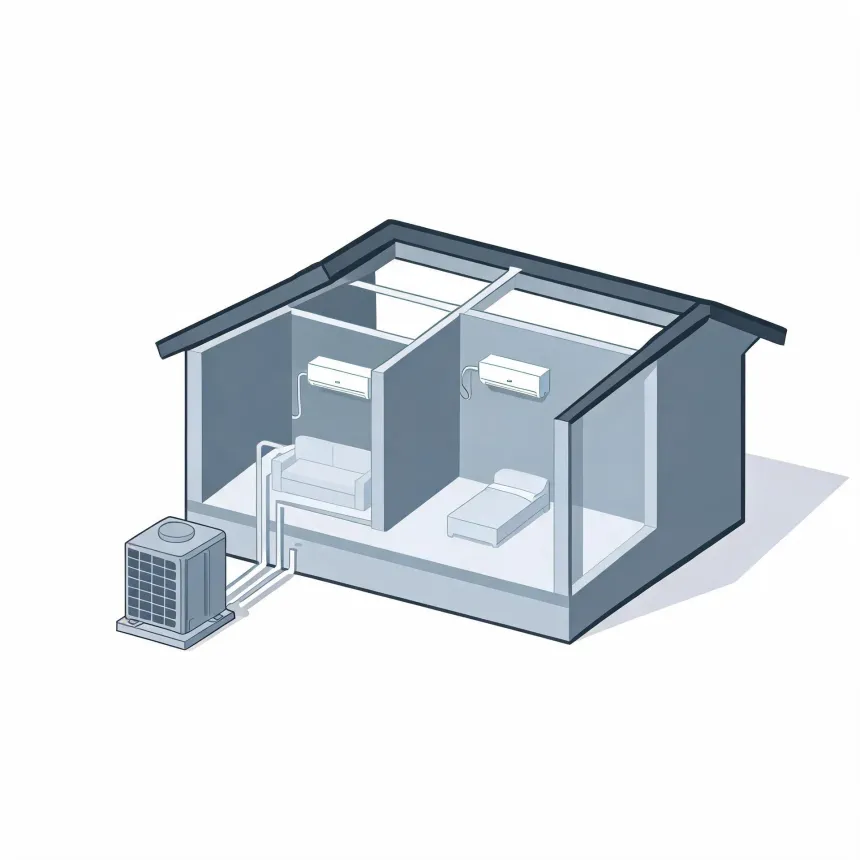
- A single outdoor unit can run more than one indoor head, so it can cover more than one room. Each indoor head handles one room or open area, so a single-zone system heats and cools one space, and a multi-zone system splits capacity across several rooms at once. The tradeoff is that the more heads you put on one outdoor unit, the less capacity each room gets on the coldest days. With winter lows averaging 14°F here, that matters more in Belfast than somewhere milder. A contractor can size the system room by room based on your house.
- Can a mini split heat a whole house?
- It can, but it takes the right number of zones placed correctly. An open floor plan might only need one or two heads to cover the whole downstairs. A house with several closed-off rooms needs a head in each one, since a mini split doesn't move heat through ductwork the way a furnace does. Homes here need heat from September through May, nine months of the year, so whatever system covers the house has to hold up over a long stretch of cold. A contractor can walk through the layout and tell you what full coverage would take.