Mini Split Installation in Ellsworth, ME
A new system here will heat from September through May and cool from July through July every year. Tell us about the house, and a licensed contractor who covers Hancock County will get in touch.
Tell us about the job
It takes about a minute.
Nine months of heat, one month of cooling, and nights near 14°F
In Ellsworth, a mini-split runs most of the year. Homes here need heat from September through May, and the coldest winter nights average 14°F. That is the range a new unit has to hold up under, not just the mild days in between.
Summer asks much less of it. Afternoons average 76°F and cooling season runs about a month. So the unit you install is mainly a heating machine that also cools in July, and it needs to be sized and set up for that. Any mini-split installed new has to meet the federal minimum for a split-system heat pump, 14.3 SEER2 for cooling and 7.5 HSPF2 for heating. Half the homes in this area still heat with fuel oil, so a mini-split installed now is often taking on more of that heating load, not just adding a room unit.
- 9 months
- September through May, your system heats
- 1 months
- July through July, it cools
- 14°F
- the average winter night it heats against
- 76°F
- the average summer afternoon it cools against
NOAA nClimDiv, 1991–2020 normals
- Is a mini split worth it?
- For most homes here, yes, especially as a way to add or replace heat in a house that relies on fuel oil now. A mini split holds its heating output at the low temperatures this area sees each winter, so it can carry real load through the season, not just take the edge off. It also gives you cooling for July, which oil heat and baseboard don't. Whether it's worth it for your house depends on which rooms you're trying to cover and what's heating them now, so that part is worth working through with a contractor.
- How many rooms can a mini split cover?
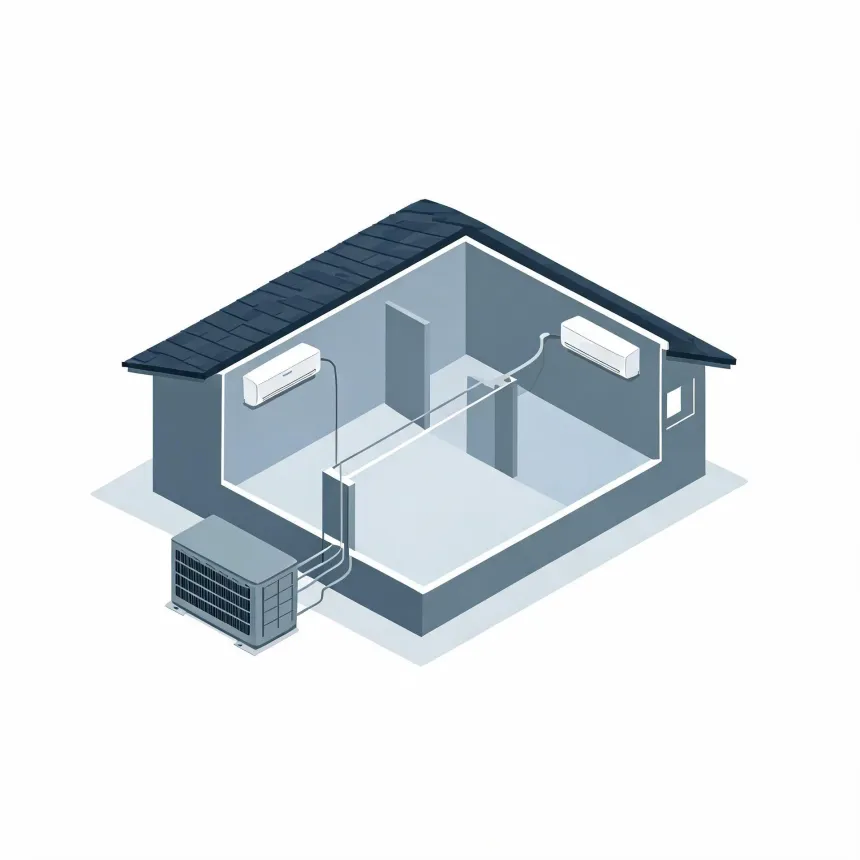
- A single outdoor unit can run several indoor heads, so one system can cover more than one room. Each indoor head handles one room or one open area, and every head keeps its own thermostat setting, so a room over the garage can run warmer than a bedroom down the hall. The right number of heads for your house depends on the floor plan and how the rooms connect, which is something a contractor sizes on a walkthrough.
- Can a mini split heat a whole house?
- It can, if you install enough indoor heads in the right rooms and size the system for how cold it gets here. Winter nights average 14°F in this area, so the system has to be chosen to hold its output at that temperature, not just at milder ones. A house with an open layout is easier to cover with fewer heads than one with a lot of closed-off rooms and hallways. A contractor can tell you, room by room, whether a mini split alone covers the house or whether it makes sense alongside your existing heat.