Mini Split Installation in Lewiston, ME
A new system here will heat from September through May and cool from July through August every year. Tell us about the house, and a licensed contractor who covers Androscoggin County will get in touch.
Tell us about the job
It takes about a minute.
Lewiston asks a mini-split to run almost all year
Nine months of heat, September through May, then July and August for cooling. That's 11 months of the year your mini-split is working. Winter nights average 13°F here, well below where a lot of heat pumps start to struggle, so the unit you install needs to be rated for real cold, not just mild shoulder-season use.
Any mini-split installed new has to meet 14.3 SEER2 for cooling and 7.5 HSPF2 for heating, the federal minimum for split-system heat pumps. That's the floor. With most homes in the area still heating with fuel oil, a mini-split rated to hold its output at 13°F is what actually gets you through a Lewiston winter instead of just taking the edge off it.
- 9 months
- September through May, your system heats
- 2 months
- July through August, it cools
- 13°F
- the average winter night it heats against
- 77°F
- the average summer afternoon it cools against
NOAA nClimDiv, 1991–2020 normals
- Is a mini split worth it?
- For most homes here, yes, especially if you're heating with fuel oil now. Nearly 6 in 10 homes in the area run on fuel oil, and a mini split can carry the load on everything but the coldest nights, when the oil furnace or a backup can take over. At 13°F average winter lows, look for a cold-climate model rated to keep producing heat at that temperature. Winter storms are common here too, and a mini split still needs power to run, so it won't help during an outage unless you have another power source.
- How many rooms can a mini split cover?
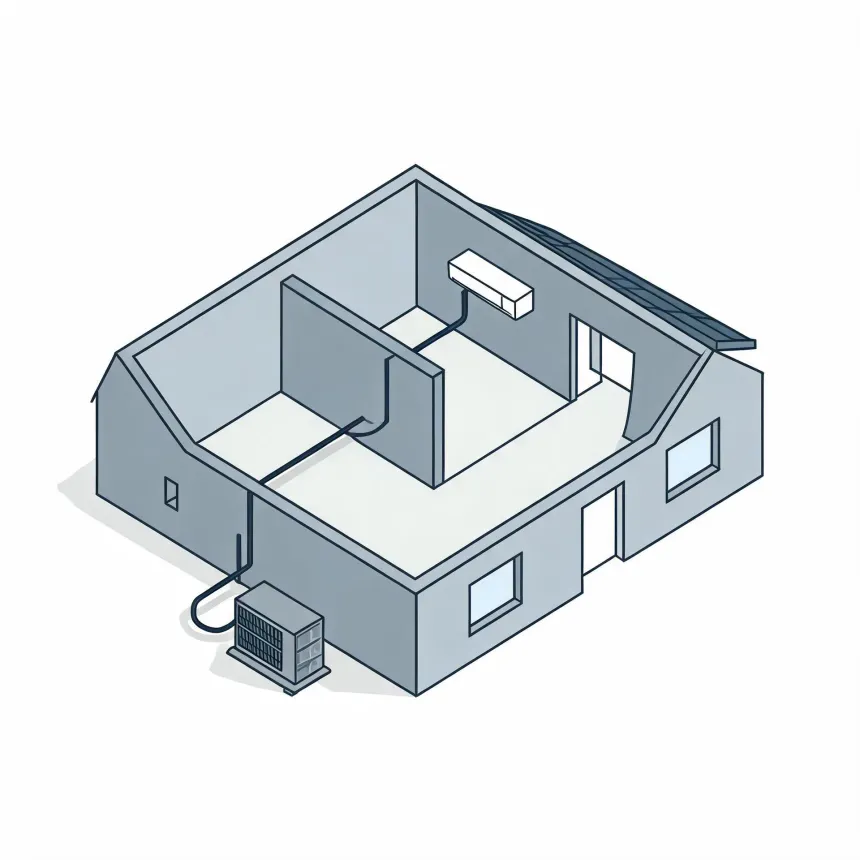
- A single outdoor unit can run one indoor head or several, depending on the system. Each indoor head heats and cools the room it's mounted in, so a one-to-one setup works best for an open layout or a single problem room. If you want separate heads in several rooms, a multi-zone system handles that, but a contractor needs to size the outdoor unit to the total load of every room you're adding, not just the biggest one.
- Can a mini split heat a whole house?
- It can, but it depends on how the house is laid out and how cold it gets. A mini split heats the room its head is in, so covering a whole house means either enough indoor heads to reach every room or an open floor plan where air moves freely between them. With winter lows here averaging 13°F, the system also needs a cold-climate heat pump rated to keep producing heat at that temperature, not just under milder conditions. A contractor can look at the layout and tell you whether mini splits alone will do it or whether you'll want a backup heat source for the coldest stretches.