Mini Split Installation in Bath, ME
A new system here will heat from September through May and cool from July through August every year. Tell us about the house, and a licensed contractor who covers Sagadahoc County will get in touch.
Tell us about the job
It takes about a minute.
Bath asks a mini-split to heat far more than it cools
Winter nights here average 16°F from December through February, and homes need heat from September through May, nine months of the year. Cooling only matters in July and August. A mini-split installed in Bath is doing winter work most of the time, so its heating capacity in real cold matters more than how well it cools on a warm afternoon.
Over half of homes here still heat with fuel oil, and a new mini-split has to hold up against nights well below freezing without help. Any unit installed now has to meet the federal minimum of 7.5 HSPF2 for heating and 14.3 SEER2 for cooling, but in a place where cold drives the load, the heating side of that rating is the one worth asking about.
- 9 months
- September through May, your system heats
- 2 months
- July through August, it cools
- 16°F
- the average winter night it heats against
- 76°F
- the average summer afternoon it cools against
NOAA nClimDiv, 1991–2020 normals
- Is a mini split worth it?
- For most homes here, yes, especially as a way to add cooling or to take pressure off a fuel oil furnace. Bath needs heat nine months a year and cooling for just two, so a mini split earns its place mainly on the heating side. At 16°F, a cold-climate model still pulls heat from the outside air, and pairing it with the oil system lets the oil furnace take over on the coldest nights while the mini split handles the milder months. Whether it makes sense for your house depends on how it's insulated and what you're heating with now, which a contractor can walk through with you.
- How many rooms can a mini split cover?
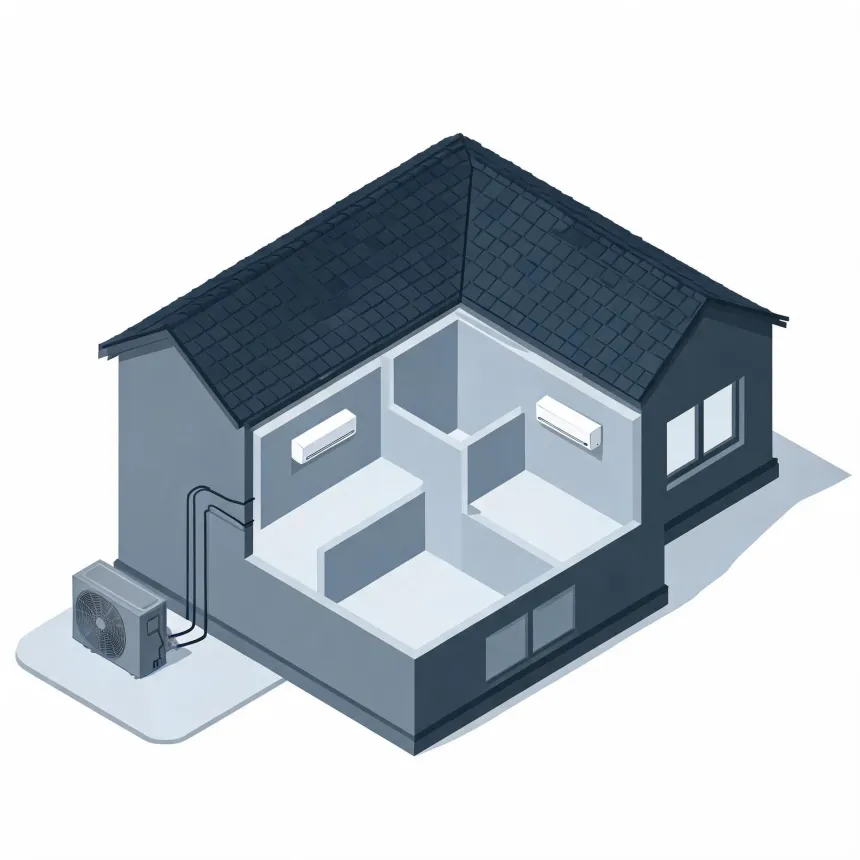
- A single outdoor unit can run one indoor head or several. Each indoor head heats and cools the room it's mounted in, so coverage comes down to how many heads you install, not the size of the outdoor unit alone. A one-room addition might need just one head. A house with several rooms that need their own temperature control would use a multi-zone setup, and a contractor can size it to the rooms you actually want covered.
- Can a mini split heat a whole house?
- It can, if enough zones are installed to reach every room, but a single indoor head only heats the space it's in. Open floor plans do better with one or two heads than homes with lots of closed-off rooms, since heat doesn't travel through walls and doors the way it does through ducts. With winter lows averaging 16°F here and heat needed from September through May, whole-house coverage means sizing the system for those conditions, not just for a mild fall day. A contractor can tell you how many zones your layout needs to cover the whole house.