
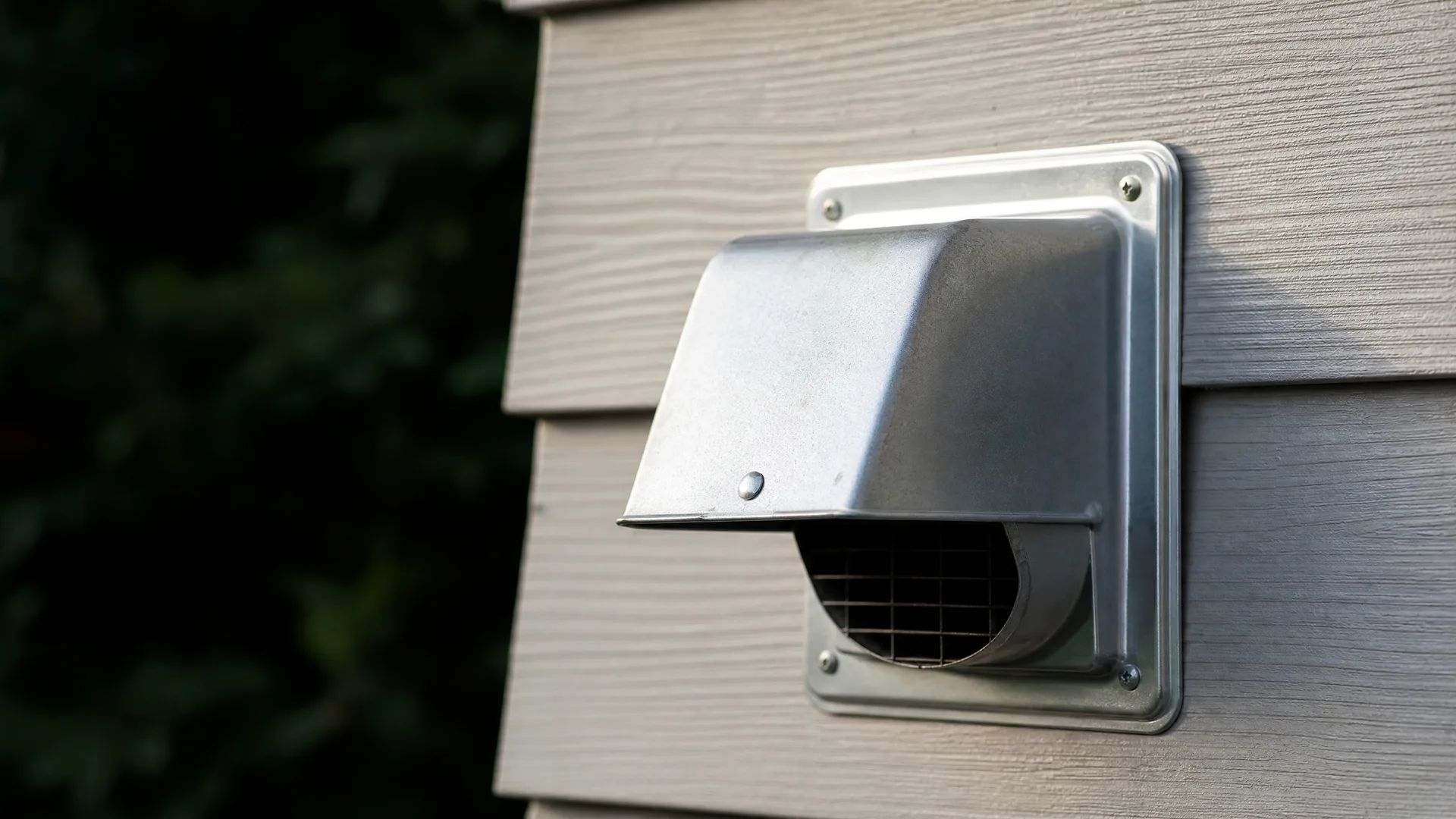
The vent hood working as it should
This cap sits clean against the siding, screen clear and the flapper free to swing. Air and moisture push straight out every time the dryer runs, with nothing in the opening to slow it down.
Your dryer has been acting up, maybe taking longer to dry a load than it used to, or the clothes come out hot to the touch instead of just warm. You're wondering if it's the machine or something in the vent line behind it. With winters as hard as they are here and heating oil already a cost you watch closely, a dryer running longer than it should adds up fast, and it's worth knowing what to look for before it turns into something worse.
A clogged vent stops the dryer from pushing damp air outside the way it should. The clearest sign is a load that used to take one cycle now needing two. You might also notice the dryer itself running hotter than normal, or the outside of the machine feeling warm during a cycle. Check the outside vent hood while the dryer runs. If little or no air is coming out, or the flap barely moves, the line is blocked somewhere between the dryer and the wall. Lint collecting around the lint trap door, a burning smell, or clothes still damp at the end of a cycle all point the same direction. Left alone, a blocked vent makes the dryer work harder every time you use it, all through the Sanford winters when you're running loads more often.

A dryer needs that moist air pushed outside through the vent hood on an exterior wall. When lint packs the line, the air has nowhere to go, so the drum fills with damp heat instead of letting it escape. The moisture just sits there and recirculates through the load. That's why one cycle turns into two, and why a towel load that used to take forty minutes now runs past an hour.

Walk outside while the dryer runs and look at the vent hood, usually low on the wall near the dryer. Air should push the flap open and you should feel a steady stream against your hand. A weak puff, or a flap that barely moves, means the line is blocked somewhere between the hood and the machine. Lint can pack in bends and joints where you can't see it, so a clear flap at the hood doesn't rule out a clog closer to the dryer itself.

Run a dryer against a blocked vent long enough and you're paying twice. Once in the extra minutes every load takes, and again in the heat that builds up where it shouldn't. Lint is what's burning, and it burns easily. With power costs what they are in York County, a dryer working that hard every week shows up on the bill before it shows up anywhere else.
There's a simpler way to check than waiting for a fire to prove the point. Go outside while the dryer runs and put your hand near the vent hood. Weak airflow, or none, means the line is blocked somewhere between the machine and that hood. That's not a repair you make yourself from the inside of the house. It's a job for someone who can get into the line from both ends, and getting matched with that person is as far as this goes today. The rest is a call you'll get, not a truck you have to track down.

2.33 people per household on average
With 2.33 people in the average York County household, most dryers here run multiple loads a week, and every load adds more lint to a line that's already restricted.
Half the homes here were built by 1980
Half the homes in York County were built in 1980 or earlier, and older duct runs tend to be longer or bent more than a straight shot to the wall, giving lint more places to catch.
Power here costs 26.93 cents per kilowatt-hour
At 26.93 cents per kilowatt-hour, a dryer working against a clogged vent runs longer to finish a load, and that extra time shows up on the power bill fast.
ACS 2020-2024 · EIA-861 2025




A vent that can't push air out doesn't get better on its own. Every load after the clog starts adds more lint to what's already sitting in that line, so the drying times stretch further and the dryer runs hotter each week this goes on. Through a Sanford winter, with the dryer running more as everyone's indoors and laundry piles up, that strain only builds faster. Clearing the line means getting into the vent run itself, pulling it apart at the joints, feeding a brush through the full length to the hood outside. That's not a dryer sheet and a vacuum attachment job. Someone who does this for a living has the tools to get the line clean end to end and check that the hood flap is moving air like it should once it's done. Once you send the request, you're not the one who has to track down who's free to come look at it. That part is off your plate.
The vent hood on the outside wall has a flapper for a reason. It opens when the dryer pushes air out and closes the rest of the time, keeping cold air and pests from coming back in through the line. If that flapper stays shut or barely moves when the dryer is running, air isn't making it to the hood, and that's worth checking from outside while a load is going. Inside the line, lint doesn't build up evenly. It catches at the elbows and bends where the airflow slows down and changes direction, so a vent with two or three turns clogs faster than a straight shot to the wall. The type of duct matters too. Rigid metal duct lets air move through with little resistance. The coiled foil or plastic duct still installed in some older homes has ridges inside that catch lint the way the elbows do, even in a straight run. When the line is restricted enough, the dryer's thermal cutoff trips. That's a safety switch cutting power to the heating element before things get hotter than they should, which is why a dryer can start blowing cool air mid cycle instead of finishing the load. None of this starts at the vent hood, though. It starts at the lint screen. A packed screen chokes airflow the same as a clogged line further down, so pulling it before every load is the first check, not the last one.


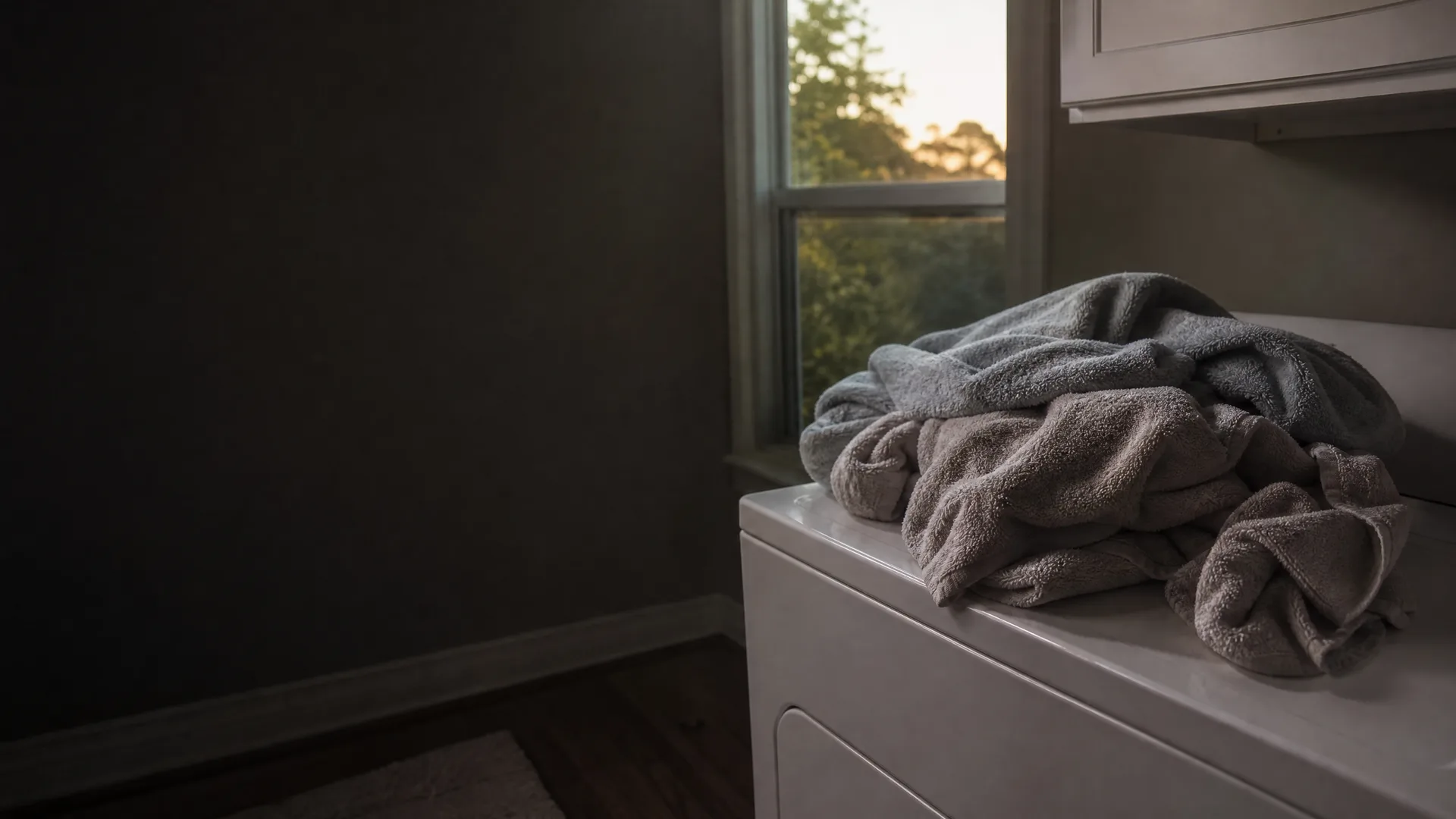
It's almost nine on a Tuesday and you're still in the laundry room. The dryer's been running since before dinner, and the towels on top of it are the ones you pulled out an hour ago, still damp enough that you set them aside instead of folding them. Outside it's the kind of raw Maine evening where you want dry towels and warm socks, not this. You open the dryer door again, reach in, and the load inside is hot, almost too hot to touch, but nowhere near dry. You've run this same batch twice now. The buzzer goes off somewhere behind you and you just stand there, deciding whether to start a third cycle or give up for the night.
Check the lint trap. If it's catching less than it used to even though you clean it every load, the rest is building up further down the line where you can't see it. Feel the wall around the vent hood outside while the dryer runs. Warm is normal. Hot, or barely any air moving against your hand at all, is not. Notice the smell. A burning or hot dust smell partway through a cycle means lint is sitting somewhere it shouldn't be, close to the heating element. Watch the dryer itself. If it shuts off partway through a cycle and starts again later, that's the high limit switch tripping because the air isn't moving. Left alone, this is a fire risk in the vent line, not just a slow dryer.


At 2.33 people, most York County households are doing wash for two or three, not a full house. That still adds up to a steady run of loads week to week, enough for lint to pack a vent line long before anyone thinks to check it.
ACS 2020-2024

This cap sits clean against the siding, screen clear and the flapper free to swing. Air and moisture push straight out every time the dryer runs, with nothing in the opening to slow it down.

Lint has packed this grid solid, covering the openings where air should pass. With the hood blocked like this, a flapper behind it may not even be able to lift, and the dryer is pushing heat and moisture with nowhere to go.
A dryer that takes two cycles to do one load, clothes that come out hot instead of warm, a vent hood outside with a flapper that won't swing free. Any one of those is the vent telling you it's packed with lint and can't push air out anymore. The fix from here isn't a mystery. It's a line that needs clearing before the restriction turns into something that costs more than time. You don't have to figure out who handles that or how soon they can get out to a Sanford address. Send the form and that part is off your plate. Someone who works vent lines for a living takes it from there, and you go back to running loads without standing over the dryer waiting to see if this is the one that scorches.
A local pro for your dryer vent cleaning