




Is a clogged dryer vent a fire risk in Portland, ME

Get matched with someone who does this kind of work in Cumberland County.

Match me with a pro

Is a clogged dryer vent actually a fire risk?

You've noticed the dryer taking longer to finish a load, or the lint trap filling up fast, and somewhere you heard that a clogged vent can actually start a fire, not just slow down your laundry. It sounds like one of those warnings that gets repeated without much behind it, so you want to know if it's real or just caution for caution's sake.

Yes, a clogged dryer vent is a real fire risk

Lint is dry and catches easily. When it builds up inside the vent, the dryer's heating element sits right next to that fuel every time you run a load. A clogged vent also traps heat that should be going outside, so the dryer runs hotter and longer to dry the same clothes. That extra heat against a vent packed with lint is how dryer fires start. In Cumberland County, where power costs run high, a blocked vent also means paying more to run a dryer that takes two or three cycles to do one load's work. The fire risk and the higher bill come from the same problem, and clearing the vent is what fixes both.

A gray-haired man in a dark coat dusted with snow stands in a warmly lit home entryway, with a lamp, sofa, window and white staircase banister behind him.
An older man with gray hair and a beard, wearing a dark coat dusted with snow and a blue plaid scarf, stands smiling in a dimly lit entryway with a window, framed picture, table lamp and staircase behind him.
A gray-haired, bearded man in a dark winter coat with snow on the shoulders stands in a doorway of a home interior with a lit lamp, framed pictures, a potted plant and a staircase behind him, and an evergreen wreath at the left edge.
A gray-haired man in a dark coat with snow on the shoulders and collar stands smiling in a dimly lit entryway with a paneled front door, lamps, and a framed picture in an adjoining room.

What does your household actually run through that vent?

  • 2.26 people per household on average

    A household here runs 2.26 people on average, per Census figures. That's loads most days of the week, and every one pushes lint through the same duct.

  • Half the homes here were built by 1976

    Half the homes in Cumberland County were built in 1976 or earlier, per the Census. A vent run that old has had decades to pick up a bend or a sag that catches lint.

  • Power here costs 27.78 cents per kilowatt-hour

    Electricity here runs 27.78 cents per kilowatt-hour, among the highest in the country. A dryer fighting a clogged vent pulls more power to finish the same load.

ACS 2020-2024 · EIA-861 2025

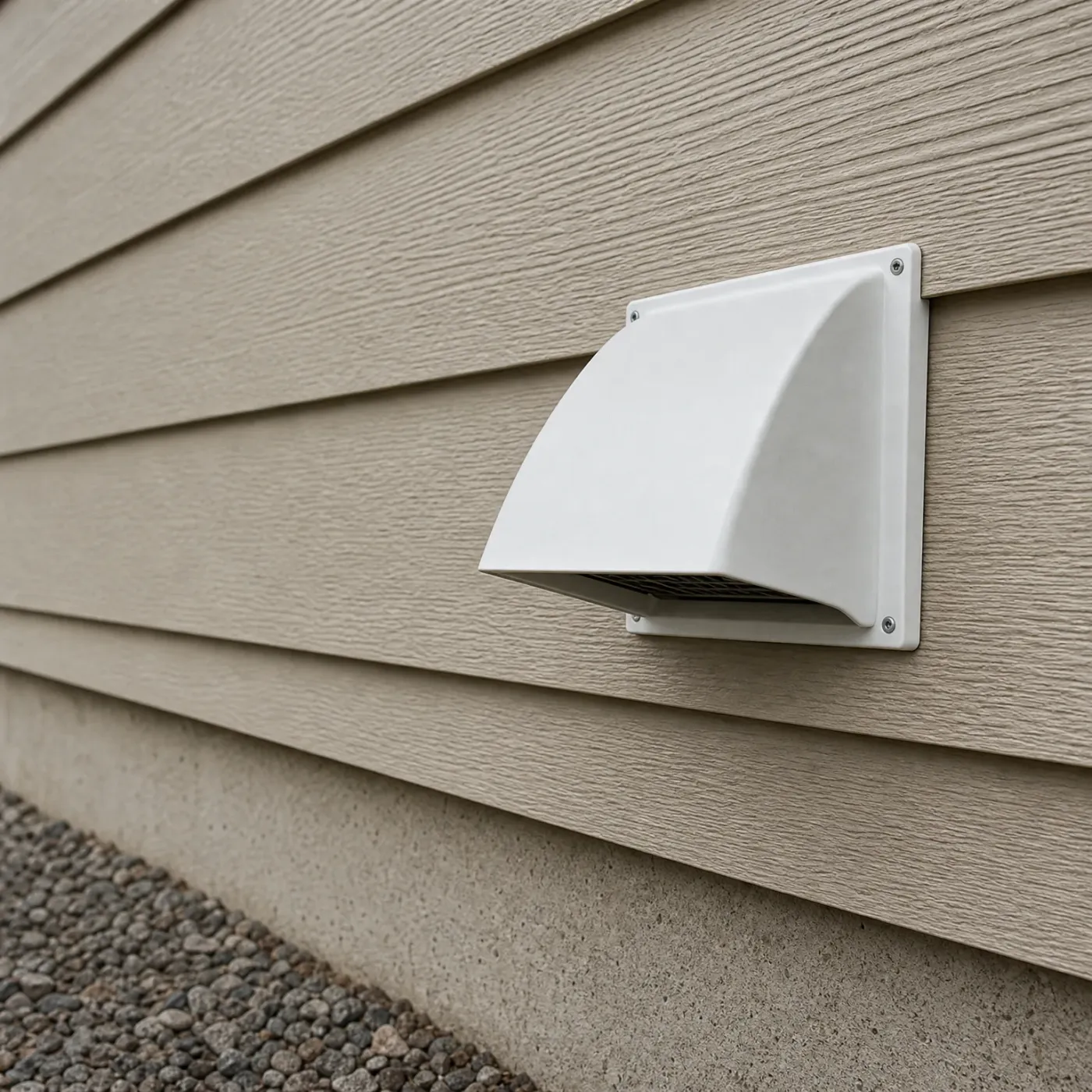
A white plastic louvered dryer vent hood mounted on beige horizontal lap siding above a concrete foundation wall bordered by gravel.

Vent clear

Air moves straight out through the cap and the flap swings open with every load. A dryer running like this finishes faster and the lint trap does most of the work it's supposed to do. This is what the vent behind your house should look like year round.


A dusty white plastic dryer vent hood with lint-clogged louvers mounted on beige horizontal vinyl siding above a concrete foundation wall and a bed of rounded gray rocks.

Vent clogged

Lint has built up around the cap until the flap barely opens, and some of what the dryer pushes out stays trapped right there in the hood. That's lint sitting a few inches from a wall, heated every time you run a load. This is what pulls a dryer vent cleaning onto the calendar.

A woman stands in the open black front door of a white-sided house with a dark shingled roof while a man in a navy jacket approaches along the walkway, with lantern wall lights, a potted shrub, and flowering garden beds nearby.

What a clogged vent means for your house

A dryer vent that cannot push air out pushes heat back into the dryer instead. That heat has nowhere to go but into the lint packed along the duct, and lint catches fast. If your laundry room sits near where people sleep, that is the part of the house closest to it. Winters here mean the dryer runs more, loads of towels and snow gear on top of the usual wash, and a blocked vent under that kind of use runs hotter for longer stretches.

You do not have to figure out whether yours is clogged by guessing. Someone who clears vents for a living can tell from the duct run and the buildup inside whether yours is a problem now or close to one. Send in what you're seeing, the slow drying, the hot room, the smell of lint when it runs, and a contractor who handles this in Cumberland County homes will get in touch to look at your setup directly.

A gray upholstered sofa with a beige cushion and knit blanket beside a curtained window, with a white mug and a book on a dark wooden table in the foreground and a lit lamp in the background.
  1. Lint builds up along the duct walls with every load dried.

  2. Airflow drops, so the dryer runs hotter to finish each cycle.

  3. Heat has nowhere to vent and collects behind the trapped lint.

  4. Hot lint reaches its ignition point inside the duct itself.

A white hooded dryer vent with a square screwed-on flange mounted on gray horizontal lap siding, above a concrete foundation wall edged with gravel stones.
A clear vent lets the flap swing open and shut with every load, and the dryer vents fully outside.
A lint-clogged hooded dryer vent mounted on light gray horizontal lap siding above a concrete foundation wall.
A vent packed with lint like this traps heat inside the duct, with the flap stuck open and doing nothing.
A woman with dark shoulder-length hair sits wrapped in a gray fleece blanket on a sofa with an open book on her lap, beside a lit lamp and a dark window.
An older woman with short gray hair in a cream cable-knit turtleneck sweater smiles while looking to the side in a wooden kitchen, with a round loaf of bread on a board in the foreground and a lit candle by a dark window.
A white hooded exterior vent cover with a screened opening mounted on beige lap siding above a concrete foundation and gravel strip.

Get the right pro for your dryer vent

After this form, you can stop searching for a dryer vent pro.

Get matched with a Cumberland County pro who cleans dryer vents.

Hand it off

You're not committing to anything by asking.

Clean It Yourself or Call a Contractor

Clean it yourself

  • You can pull lint from the trap after every load and vacuum what the trap misses, but that only reaches the first few feet of duct.
  • A handheld brush kit reaches further into the duct, though most only cover a straight run and stop at the first bend.
  • Checking the outside flap during a load tells you whether air is actually moving, which is the simplest test you have.
  • If the duct run is long or has several turns, lint well past the trap stays put no matter how often you vacuum.
  • A load that still takes two cycles to dry after you've cleaned what you can reach means lint is further in than you can get.

Have it cleaned professionally

  • A contractor runs a brush and vacuum the full length of the duct, including bends a handheld kit can't reach.
  • Cleaning from both ends, at the dryer and at the outside cap, clears lint a one-sided brush would leave behind.
  • A full cleaning restores airflow enough that the flap outside swings open the way it should with every load.
  • Equipment built for the job gets through duct runs that pass through walls or attics where you'd have no access at all.
  • A contractor can tell you if the duct itself is the wrong length or has too many turns for safe venting, not just whether it's clean.
A metal hooded dryer vent with a louvered opening mounted on gray horizontal lap siding, next to a plain off-white wall.

Heat has to go somewhere

A dryer makes heat continuously while it runs, and the vent is the only way that heat leaves the house. Natural gas or electric, it doesn't matter. Block the path and the heat stays inside the duct, building past what the duct and the lint inside it can handle. The dryer's own thermostat can only do so much once airflow drops that low.

A stainless steel hooded dryer vent screwed to light gray horizontal lap siding, with a blank white wall occupying the left side of the frame.

Why the duct length matters

A straight, short run clears itself faster than one with turns in it. Lint catches at every elbow and joint, and a duct that bends to clear a corner or reach an exterior wall collects more of it than a duct running straight out the back. If your dryer sits far from the outside wall, the run to daylight is longer, and there's more duct for lint to build up in before it ever reaches the cap.

A clogged dryer vent is a real fire risk, not a worst-case story someone tells to sell you a service. Lint catches fire at a temperature a blocked duct can reach, and the longer a vent stays packed, the longer the dryer runs hot to get a load dry. You don't need to guess at the condition of yours. Someone who clears vents for a living can look at the duct, the cap, and the flap, and tell you in a few minutes whether yours is moving air the way it should or whether it's been building toward the kind of blockage this page just walked through. Once you send the request, you're done chasing it down. A contractor who handles this in Cumberland County gets matched to you and takes it from there, and you go back to running the dryer without wondering about the vent behind the wall.

A dark gray hooded exterior vent cover with a louvered opening mounted on dark horizontal lap siding, viewed at a steep angle.

A pro who works on dryer vents

One request and the search for a pro is handled.

Duct and vent cleaningCumberland County, ME
Step 1 of 3

What kind of equipment?