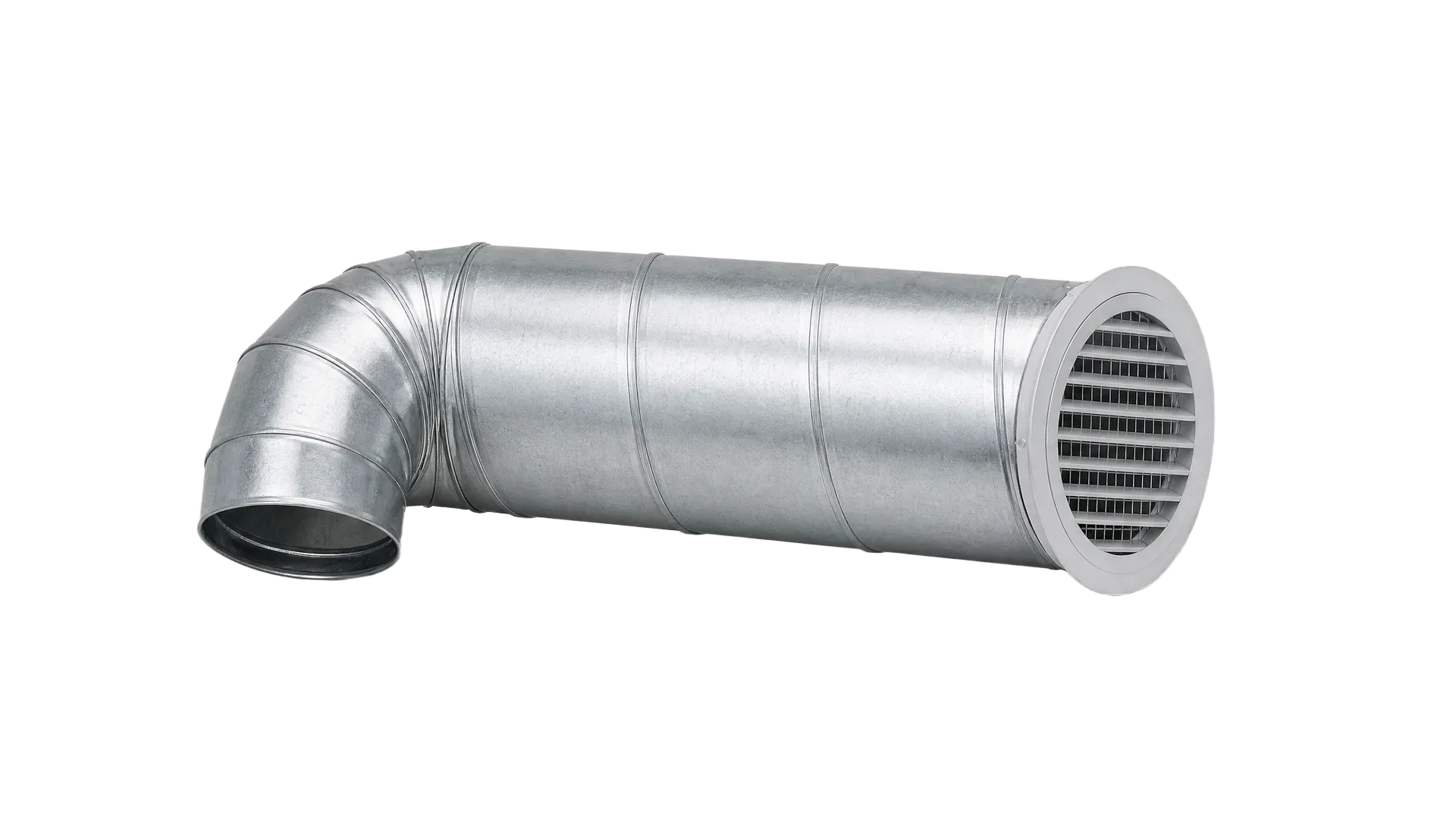
Sealed and running right
This is what a duct system looks like when it's doing its job. Metal runs stay joined tight from the furnace to every branch, so the air the burner heats ends up in the rooms it was built to reach, not the basement.
Leaky ductwork usually shows up as rooms that never feel right. One bedroom stays cold all winter no matter what the thermostat says, or the upstairs bakes while the downstairs is fine. You might notice the furnace or air handler running longer than it used to, or hear it cycling on and off more often. Dust building up fast near vents, or a musty smell from the basement or crawlspace where the ducts run, points the same direction. If you can get to the ductwork and see gaps at the joints, foil tape peeling back, or sections that have pulled apart where they connect to the furnace, that confirms it. In Cumberland County, where winters are hard and most homes run on oil heat, leaky ducts mean the system works harder for longer stretches to keep up, and conditioned air gets lost into spaces that don't need it. The fix depends on where the leaks are and how bad they've gotten, but the signs themselves are usually easy to catch once you know what to look for.


Half the homes here were built by 1976
Half the homes in Cumberland County were built in 1976 or earlier. Ductwork that old has had decades of seams to loosen.
Heat runs September through May
Heat runs September through May here, close to nine months straight. That's nine months for a leak to push up your oil bill.
Cooling runs July through August
Cooling only runs July and August, but a leaky duct still wastes the cold air those two months, right when you're already paying the most for power.
ACS 2020-2024 · NOAA nClimDiv 1991-2020

Most homes in Cumberland County heat with oil, and oil costs money every time the burner fires. Air that leaks out of a duct seam before it reaches a room is heat the furnace already paid to make. The thermostat can't see that loss. It just reads a cold room and calls for more heat, so the furnace runs another cycle to cover air that never arrived.

A duct system under pressure doesn't just push air out through a bad seam. It also pulls air in wherever a return line runs through the basement or a crawlspace. That means dusty, cold basement air gets drawn into the system and delivered to the rooms upstairs, right alongside the heated air the furnace is producing. The filter only cleans what passes through it, not what leaks in past the ducts themselves.
Walk the house and check each room against the thermostat. A bedroom that stays cold all winter, or a bathroom that never warms up, usually sits at the end of a duct run with a seam leaking along the way. Look in the basement or attic where the ducts run and feel for warm air around the joints, or dust that's been pushed out and settled near a seam. A musty smell near the ducts can mean they're pulling air from a crawlspace instead of the rooms they're supposed to serve. None of this shows up on the thermostat. It shows up as higher oil bills and rooms you've stopped expecting to be comfortable.
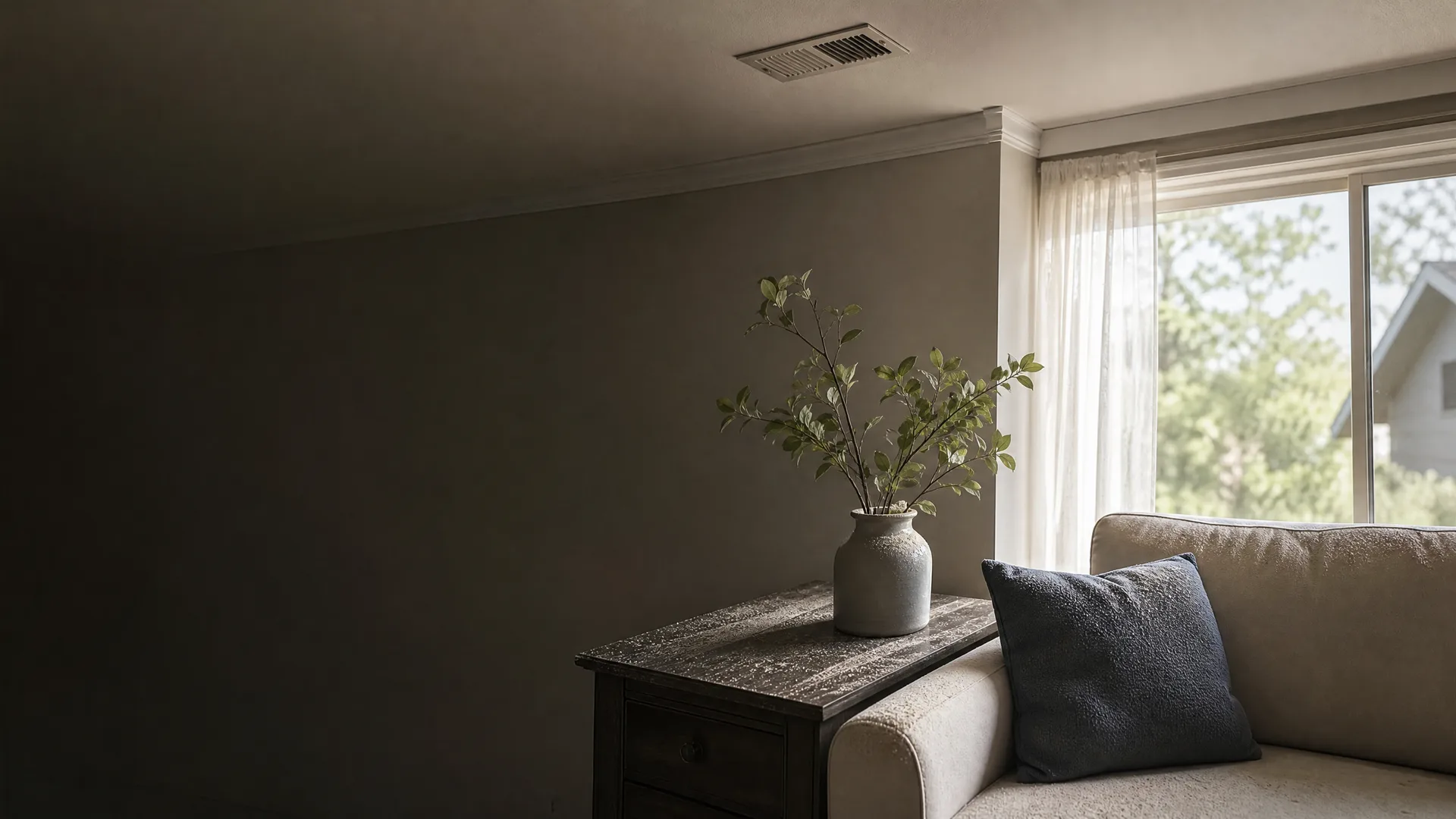
It's late April, and the afternoon sun comes in low across the living room. You're on the couch, and the light catches the ceiling vent above the TV. A gray ring of dust has built up around the grille, and a thin film of it sits on the bookshelf underneath, on the lamp, on the top of the picture frames. You run a finger along the shelf and it comes back dark. The furnace shut off for the season weeks ago, but the dust kept settling the whole time it ran. You make a note to wipe it down before anyone notices, and go back to what you were doing.
You've already spotted the cold bedroom, the long furnace cycles, maybe the dust ring around the vent. Tracking down who can actually get into that ductwork is its own job on top of that, calling a few companies, explaining the same cold room three times, waiting on quotes that may or may not be comparable. Cumberland County winters run September through May, and every week spent comparing contractors is a week that leak keeps venting heated air into the basement instead of the room it's meant for. Oil doesn't get cheaper while you wait. Send the request and that search is over. You're not left sorting through who to call or chasing a callback; the next step is someone getting in touch about the duct run that's been losing you air and money all season.

This is what a duct system looks like when it's doing its job. Metal runs stay joined tight from the furnace to every branch, so the air the burner heats ends up in the rooms it was built to reach, not the basement.

Here the ductwork runs through the joists with seams that have opened over the years. Warm air works its way out along the exhaust pipe and wiring instead of reaching the room it was sent to, and the basement stays warmer than it should while a bedroom upstairs doesn't.




Air reaches the rooms it was meant for. The furnace cycles the way it's supposed to, and every room matches what the thermostat says.
Heated air spills into the basement before it reaches the vent. The furnace runs longer, burns more oil, and the cold room stays cold.

Sheet-metal runs cross the ceiling joists and carry air straight from the furnace to the rooms above. Every joint sits tight, so the air moving through those pipes is the same air that reaches the vents. Nothing escapes into the basement along the way.

The same run of galvanized pipe and spiral duct sits exposed under the floor joists, but a seam along the way has opened up. Warm air works its way out into the basement instead of reaching the room it was sent to, and the furnace runs longer to make up for it.


At 27.78 cents a kilowatt-hour, electricity here costs more than in most of the country, and that's what runs the blower motor pushing air through your ducts all winter. A split seam means that motor runs longer to get the same rooms warm, and every extra hour shows up on the bill at that rate.
EIA-861 2025
A duct system that leaks shows itself in ordinary ways. A room that never matches the thermostat, a furnace that runs longer than it should, dust ringing a vent that should just be blowing clean air. None of those are separate problems. They are the same leak showing up in different rooms of the house. Cumberland County makes this worse than most places. A lot of the ductwork here was run decades ago, and that much time gives seams a long chance to work loose. Heat stays on here most of the year, so a leak doesn't cost you for a few weeks and stop. It costs for months, every time the burner fires and the oil gets used to heat air that never makes it past the basement. The blower motor pays for it too, since it has to keep pushing air through a system that's losing some of what it moves, and electricity here isn't cheap to begin with. None of this means tearing into walls or floors. Sealing the seams where they actually are, in the basement, the attic, or the crawlspace, is usually what fixes it, and it doesn't take long. Once that's done, the house stops fighting itself. The room that was always cold stops being the exception, and the furnace stops working overtime to make up for air it already heated and lost.


Stop chasing a duct system pro
Answer a few questions about the duct cleaning and skip the search.
