
Signs your ducts need cleaning in Lewiston, ME
Dust coming back within a day or two of cleaning, rooms that stay stuffy even with the furnace running, and a musty smell when the heat first kicks on in the fall are the clearest signs your ducts need attention. With most homes in the Lewiston area heating with oil, ducts also carry fine soot from the burner, and that soot settles inside the trunk lines and shows up as gray film around your supply registers. Mice and other pests get into basement and crawlspace ductwork too, leaving debris that blows out when the system runs. If your filter is loading up faster than it used to, or you're noticing more sneezing and coughing indoors once the heat runs all winter, the ductwork is likely holding onto what it should be moving outside. Catching this early keeps it from turning into a bigger strain on a furnace that already works hard through a Maine winter.


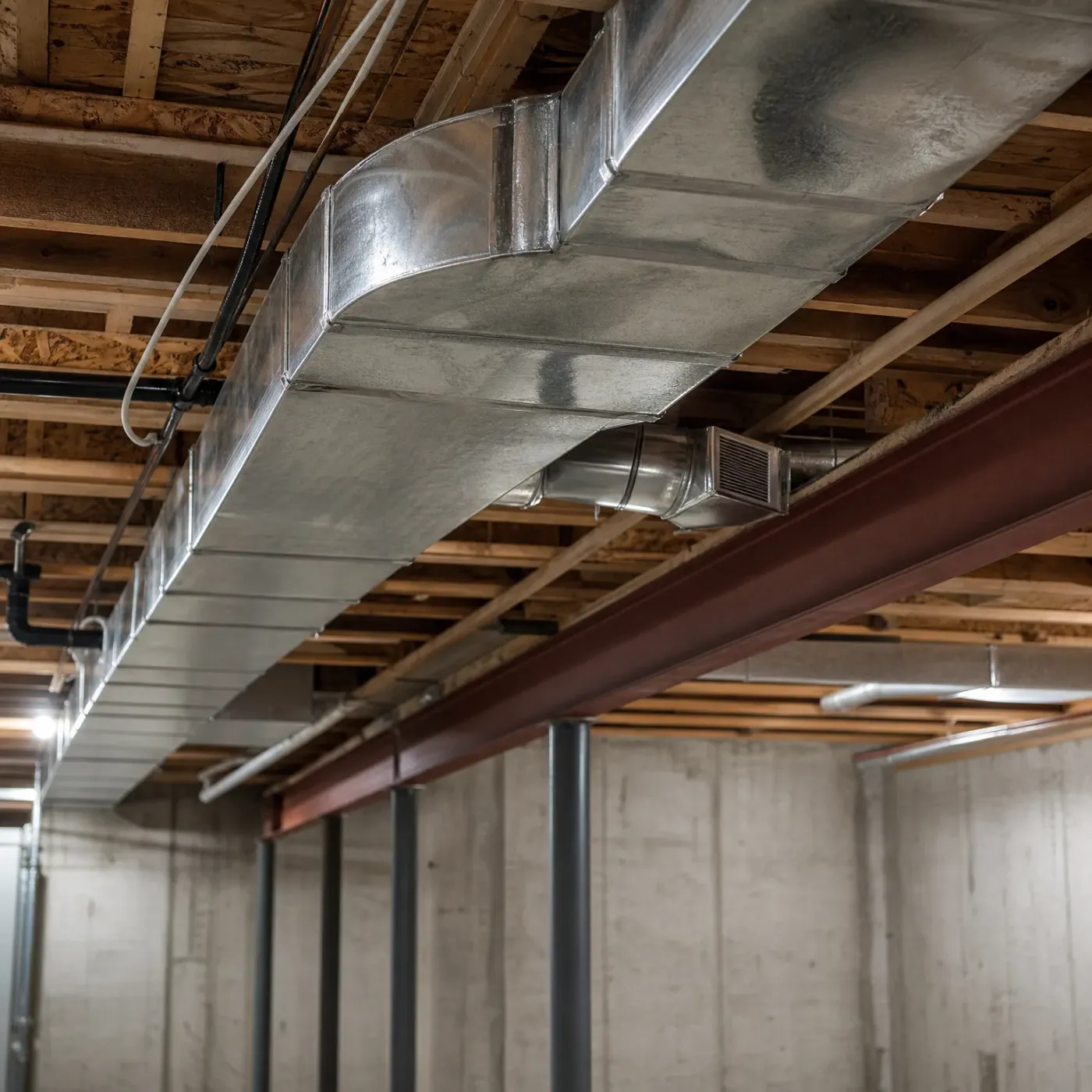
Cleaning your ducts isn't just running a vacuum through the metal runs. A technician sets up a collector at one end of the system and works a brush or air whip through the ductwork from each register, pulling loose whatever's built up inside. Because you're heating with oil, that's often a fine soot that settles well before it ever shows up on your filter. The supply and return sides get looked at separately, since the return plenum near the furnace tends to collect the heaviest dust. Anywhere airflow runs weak, like a spare room or a space you keep closed off, usually holds more buildup than the rooms you use every day, simply because there's less air moving through to carry it along. If your system has a humidifier bypass or a section of old duct board, that gets checked early, since those spots hold moisture and can grow mold. The blower compartment matters too. Fine dust collects there even when the metal runs look clean, so a thorough job covers that part of the system as well.
How a duct cleaning actually works
- Oil heat leaves a fine soot that coats the inside of your ducts long before you'd ever see it on a filter.
- A whole-house clean uses a vacuum collector at one end while a brush or air whip knocks debris loose at each register.
- The technician checks the supply and return sides separately, since dust tends to build heaviest right at the furnace's return plenum.
- If your system has a humidifier bypass or an old duct board section, those get checked first because they trap moisture and grow mold.
- Registers in rooms you rarely use often hold the most buildup, since low airflow there lets dust settle instead of blow through.
- A proper cleaning also clears the blower compartment itself, not just the metal runs, since that's where a lot of fine dust collects.




One request and it's handed off
Your request goes to one pro, not a list of companies.
Send the form and finding a duct cleaner is handled.
There's no charge for the request.
Why does duct age and runtime matter so much here?
Half the homes here were built by 1969
Half the homes in Androscoggin County were built in 1969 or earlier. Older duct runs have had decades to collect dust, especially if the cleaning has never been done.
Heat runs September through May
Heat runs September through May here, about nine months. That's nine months of air moving through the same ducts, pushing around whatever has built up inside them.
Cooling runs July through August
Cooling only runs July and August. The ducts spend most of the year moving heated air, so what settles in them is mostly dust and soot, not mold from summer humidity.
ACS 2020-2024 · NOAA nClimDiv 1991-2020
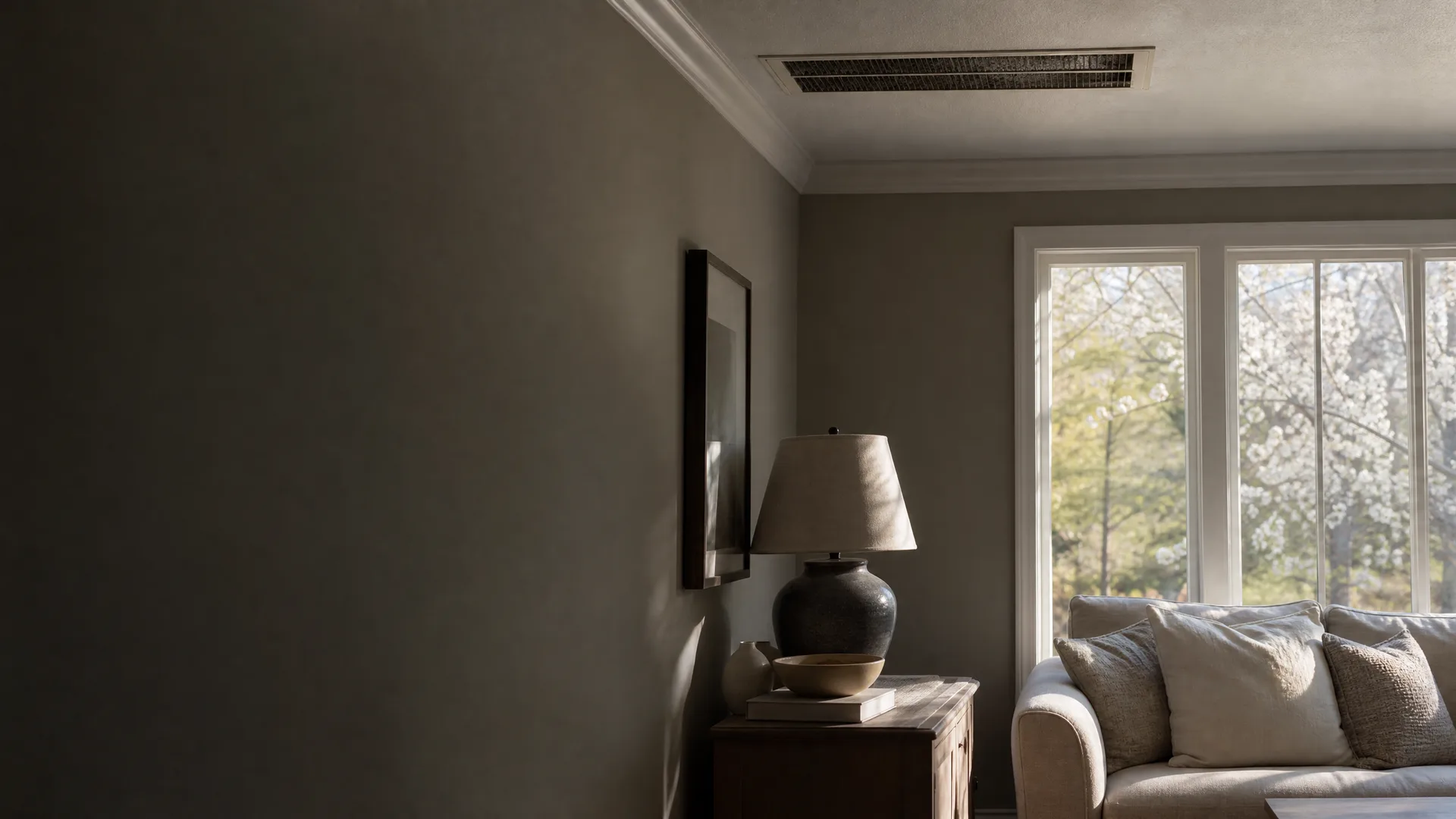
You open the curtains on a clear spring morning and the sun cuts across the living room at an angle it hasn't hit in months. It catches the ceiling vent first. The grille is gray along every slat, and a soft line of dust has settled on the bookshelf underneath it, on the lamp shade, on the arm of the couch. You run a finger along the top of the frame and it comes away dark. The room had the furnace running most nights through the winter, and this is what got carried into it. You hadn't noticed until the light came back.


What the signs are telling you
- Dust back within a day or two, rooms that stay stuffy, and a musty smell at the first fall heat are the signs that point to a duct cleaning.
- Oil heat leaves soot inside the ducts well before a filter ever shows it, which is most of what's running through Lewiston furnaces.
- A proper cleaning pulls debris from every register, not just the ones you can see from the living room floor.
- A contractor who works on duct systems in Androscoggin County through nine months of heat each year knows what decades of oil soot and old duct runs tend to look like.
- One local contractor takes the job, so you're not fielding calls from a handful of companies trying to win the work.
- Once the signs are there, the next step is getting someone who knows this equipment to look at the ducts directly.
Dust that settles back in a day or two, a living room that never quite cools off or warms up, a musty pull of air when the furnace first fires in the fall. Those are the signs, and in a house that heats on oil for nine months of the year, they tend to show up earlier than a filter ever will. Soot from oil heat works its way into the duct runs long before it reaches the filter, so by the time you notice it in the air, it has been building for a while.
None of this means guessing at what's wrong. It means getting someone into the house who can look at the registers, the runs, and the furnace connection, and tell you what's actually sitting in there. A contractor who works on ductwork across Androscoggin County through a full Maine winter has seen what years of oil soot does to an old duct system, and knows the difference between a surface clean and one that actually clears every register, not just the ones you can reach from the living room floor.
When you send a request through this page, it goes to one local contractor, not a handful of companies competing for the job. That means no string of calls to field and compare, just one contractor who already knows this equipment and this area showing up to look at what you described. If the signs you're seeing match what's above, that's the next step: someone local, looking at your ducts directly, telling you what they find.





Done looking for a duct system pro
The pro who gets in touch is licensed in Maine and works in Androscoggin County.
You only hire the pro if you want to.