

Birds nesting in a dryer vent in Portland, ME

Get matched with a Cumberland County pro who cleans dryer vents.

Get matched

A dryer vent that stays quiet for months looks like a good spot to a bird looking to nest, especially in spring when house sparrows and starlings are hunting for a sheltered place to raise a brood. The vent hood flap keeps most weather out, but a bird can still push through, and once it has built inside, that flap can no longer close all the way. Twigs and nesting material block the duct, so the air your dryer pushes out has nowhere to go. That means longer drying times, a dryer that runs hotter than it should, and lint with nowhere to vent building up right where the nest is. That combination is a real fire risk, not just an inconvenience. If you have noticed chirping near the vent, a smell of burning, or clothes taking two cycles to dry, the vent likely has a nest in it and needs to be cleared out and checked before the dryer runs again.

A white plastic hooded dryer vent cover mounted with screws on beige horizontal lap siding, next to a plain pale wall surface.

Why the flap fails to stop them

The flap on a vent hood is built to keep wind and rain out. It is not built to hold against a bird working at it from outside. House sparrows and starlings push through a flap that only opens one way under airflow, and once inside, they bring in twigs and dried grass. That nest material sits right in the path the dryer needs clear to push air outside.

A metal louvered exterior vent hood screwed to a beige horizontal lap siding wall, with a blank light-colored surface filling the left half of the frame.

What a blocked vent does to your dryer

When a vent is packed with nesting material, the dryer has nowhere to send the hot, damp air it produces. Clothes take longer to dry, the machine runs hotter than it should, and lint that can't escape builds up behind the blockage. That is the same lint that feeds a dryer vent fire, which is why a blocked vent in Cumberland County is worth checking before fall and winter laundry loads pick up.

Why does this matter more in a house like yours?

  • 2.26 people per household on average

    Cumberland County households average 2.26 people, and most of that laundry runs through one vent. A blocked vent shows up fast when the dryer is in daily use.

  • Half the homes here were built by 1976

    Half the homes here were built in 1976 or earlier. A vent run that old has likely been reworked or patched at least once, and an old flap is easier for a bird to force.

  • Power here costs 27.78 cents per kilowatt-hour

    Power here runs 27.78 cents per kilowatt-hour, among the highest in the country. A dryer fighting a blocked vent takes longer to dry a load and costs more every time it runs.

ACS 2020-2024 · EIA-861 2025

The nest is still small

Caught early, this is a simple job. A bird has started gathering material but hasn't packed the duct tight yet. The dryer may still run, though it takes longer to dry a load and the exhaust smells warmer than usual. A contractor can clear the vent, confirm the duct is sound, and get the airflow back to where it should be. This is the easier case to walk into, and the one where a quick call heads off the bigger problem. Spring is when this shows up most, while sparrows and starlings are still building.
The nest has taken hold

By early summer, a nest built in spring can fill the vent run solid, sticks, grass and all packed against the hood flap. The dryer may stop heating, trip its thermal cutoff, or shut off mid cycle. Lint trapped behind the blockage is a fire risk with nowhere for heat to go. Clearing it usually means opening the duct, not just running a brush from the hood end. If chicks have hatched inside, the work has to wait on local wildlife rules before the vent can be touched at all.

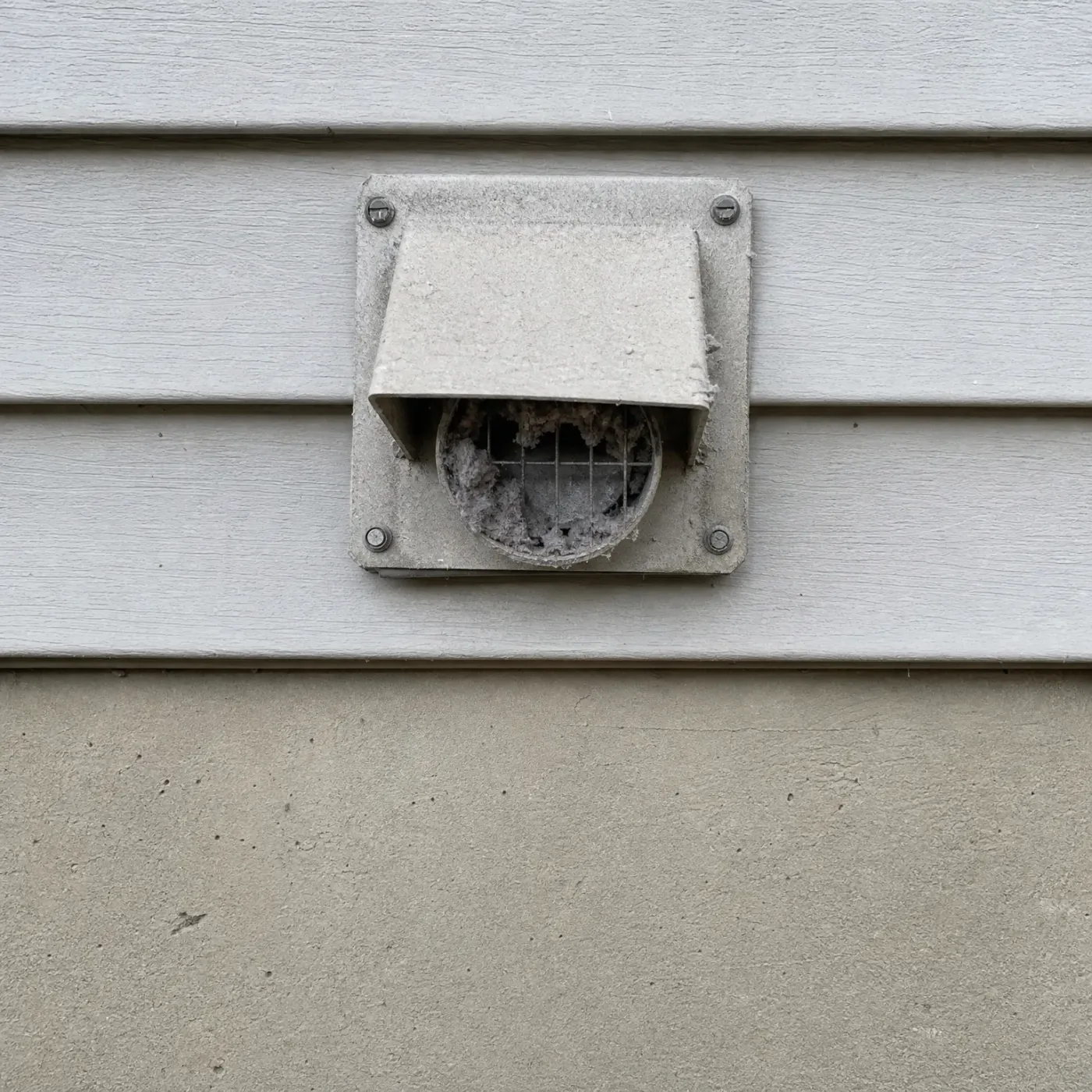
A metal dryer vent hood screwed to light gray lap siding, with lint clogging the round opening and a lower concrete wall below.
Before you get your dryer vent cleaning
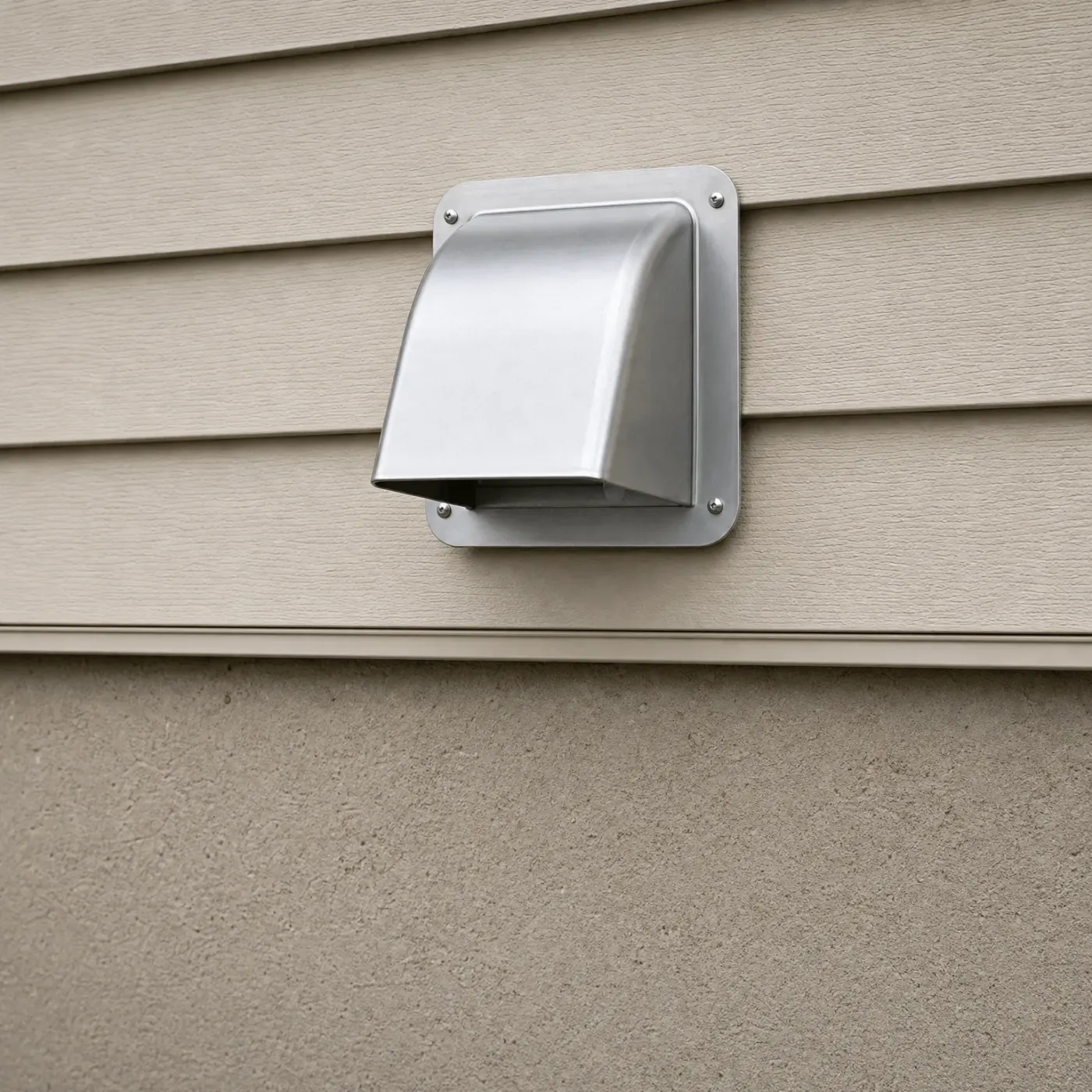
A metal hooded dryer vent cover mounted on beige horizontal lap siding above a textured concrete foundation wall.
After you get your dryer vent cleaning
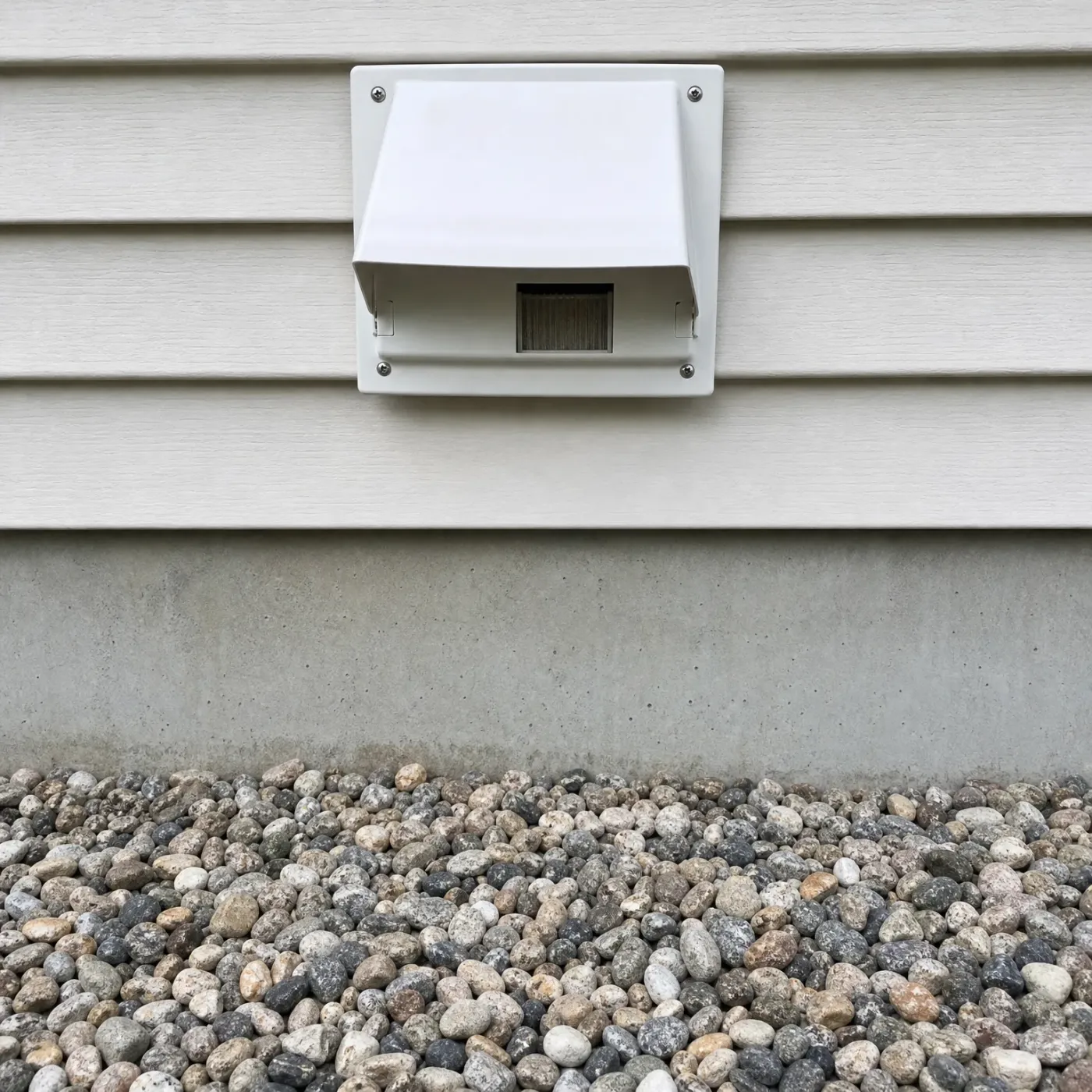
A white hooded dryer vent cover screwed into beige lap siding above a concrete foundation wall, with a bed of rounded gravel at the base.

The flap sits flush and closed

This is what a clear vent looks like from outside. The hood sits tight against the siding and the flap hangs straight, moved only by the dryer's own airflow when a load is running.

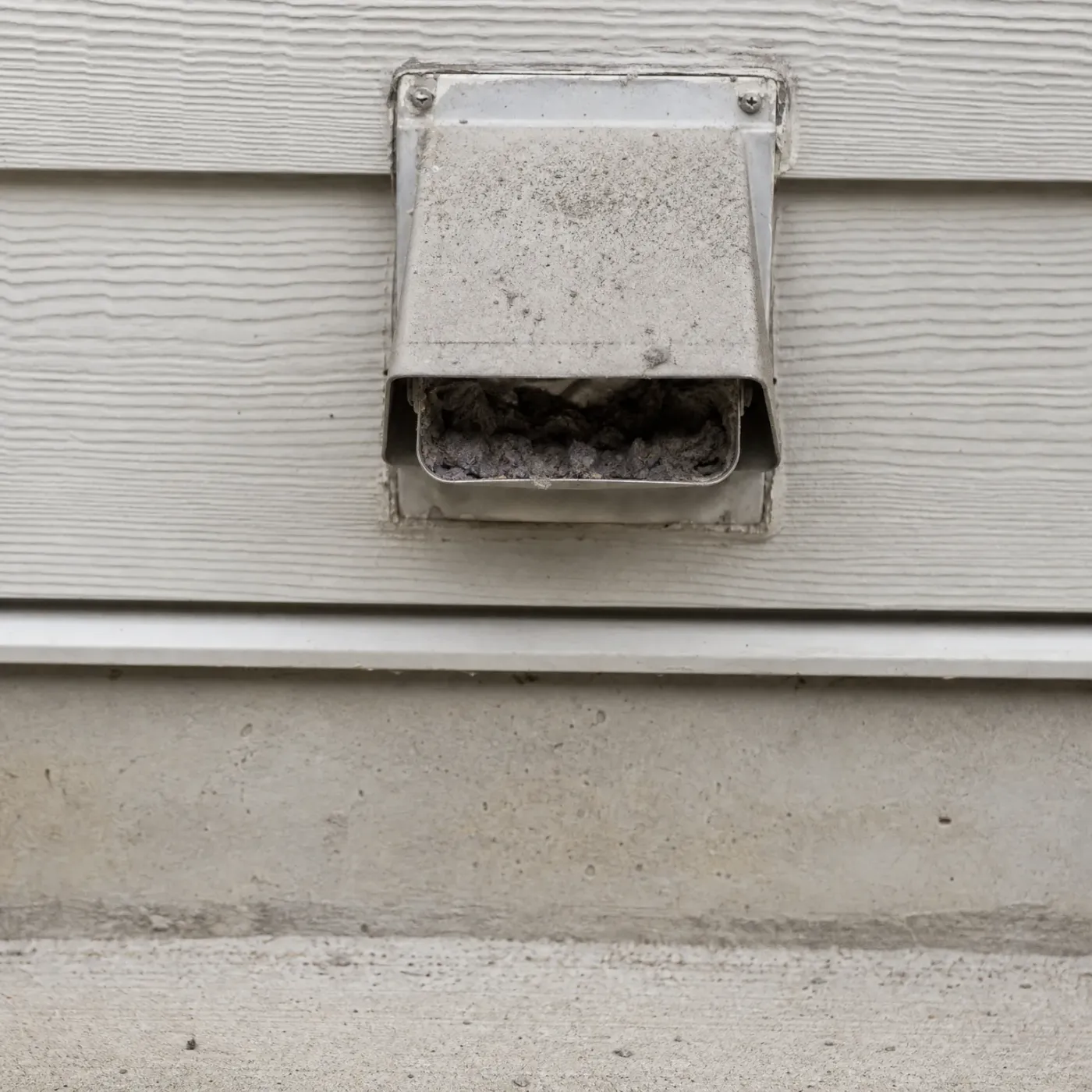
A metal dryer vent hood mounted on light gray horizontal lap siding, with its opening clogged by gray lint, above a concrete foundation wall.

Lint packed behind the flap

The flap can't close all the way anymore. Lint has built up behind it, and that buildup is exactly what a bird finds first when it's looking for a place to nest.

Clear It Yourself or Call a Contractor

Clean the vent yourself

  • A broom handle or shop vac reaches the first few feet but can't get past the first bend in the duct.
  • Pushing a nest further in packs it tighter against the duct wall instead of pulling it out.
  • You can check the hood from outside and see whether the flap hangs straight, which tells you if the blockage is near the wall or further back.
  • Running the dryer to force the nest out risks scorching feathers and twigs against the heating element.
  • Without a rod and brush set sized to the duct, there's no way to confirm the full run is clear once you're done.

Have a contractor clean it

  • A contractor runs a rod and brush the full length of the duct, not just the section you can reach by hand.
  • They can confirm the vent run is clear end to end, including bends and the stretch behind the wall.
  • If the nest has packed in moisture, a contractor can check for duct damage the vacuum pass alone wouldn't show.
  • Clearing the blockage restores normal airflow, so a load that's been taking longer to dry goes back to its normal time.
  • A contractor working from outside can also check the hood and flap, since a damaged flap is often how the bird got in to begin with.
  1. A contractor disconnects the dryer duct from the back of the machine

  2. A camera or probe checks the duct's full run for the nest

  3. Nesting material gets pulled out from both ends of the duct

  4. The vent hood and flap get checked so it closes all the way

2.26 people per household on average

With 2.26 people in the average Cumberland County household, most homes run the dryer most days of the week. A vent that's already struggling to push air past a nest falls further behind with that kind of use, and a load that used to take forty minutes starts taking twice that.

ACS 2020-2024

An older man with gray hair and a beard stands in a dimly lit entryway wearing a dark hooded coat dusted with snow, with a lit table lamp, framed picture, and front door with glass panels behind him.
An older man with gray hair and a beard, wearing a dark snow-dusted jacket and scarf, stands smiling in a dimly lit entry hall with a lamp, wooden front door and staircase behind him.
A gray-haired bearded man in a dark coat with snow flecks on the shoulders stands just inside a dimly lit home entryway, with a lamp, framed pictures, sofa and candle-style lights in the background.
An older man with gray hair and a beard, wearing a dark coat and scarf dusted with snow, stands in a warmly lit home entryway with an arched doorway, lamps, and a living room visible behind him.

Get the right pro for your dryer vent

A dryer vent with a bird's nest in it is not something to wait out until spring cleaning. The duct is what carries the hot, damp exhaust from your dryer outside, and lint catches on nesting material the same way it catches on a bent duct wall, building a clog that gets denser with every load. In Cumberland County, with winters as hard as they are and heating oil already the main cost most households carry, a dryer running longer and hotter to push air past a blockage is one more load on a house that doesn't need it. A contractor who clears vents like this knows where nests tend to pack in and how to check the full run, not just the first few feet. Once you send the request, that part is off your plate. You don't have to figure out how bad it is or whether it's safe to keep running loads in the meantime. Someone who does this work takes it from here.

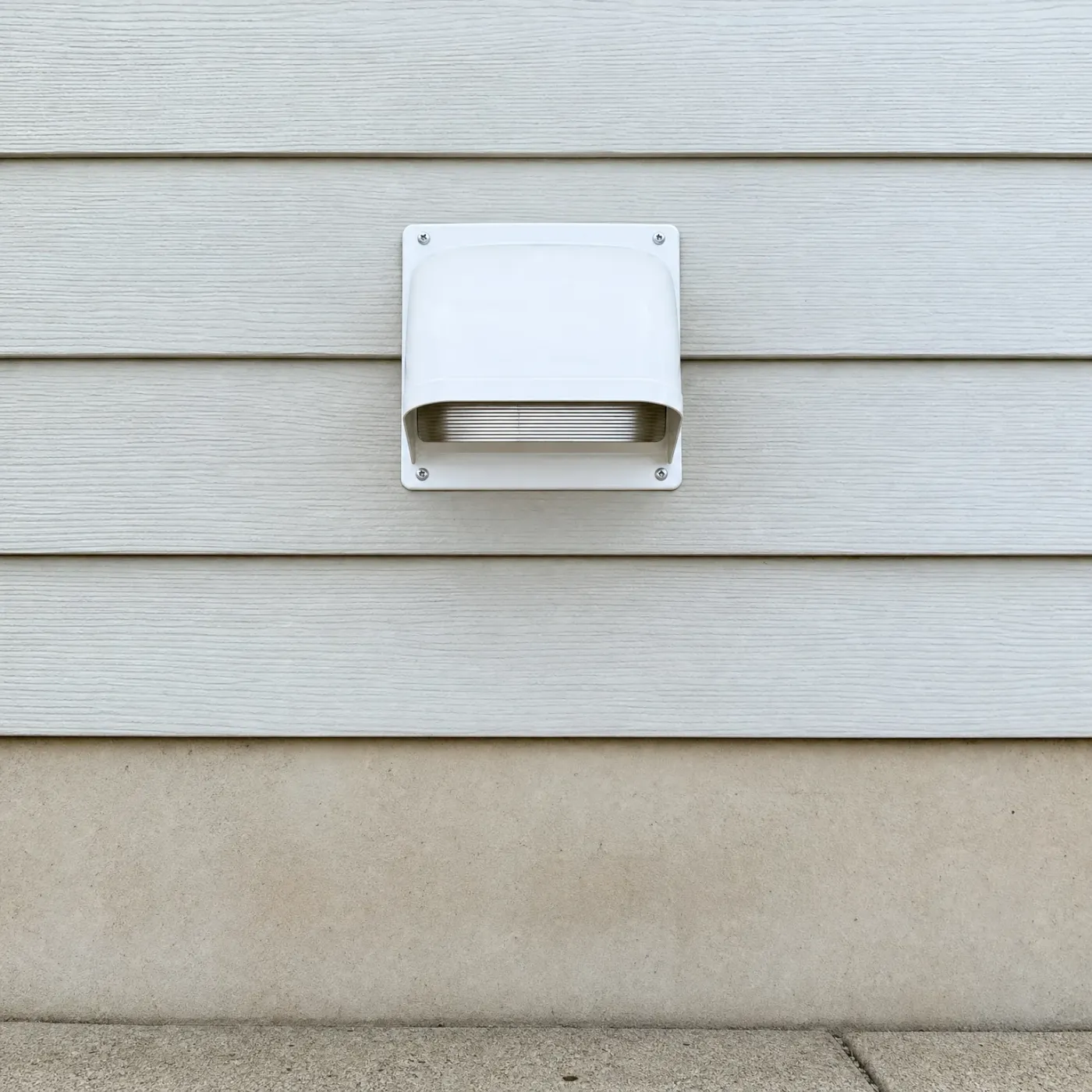
A white hooded dryer vent with a louvered opening mounted on light beige horizontal lap siding above a concrete foundation and sidewalk.

Vent clear and closed

This is what the hood should look like year round. The flap hangs straight against the siding, and it only lifts when the dryer is running. Air moves out fast, and nothing outside has made a home of it.

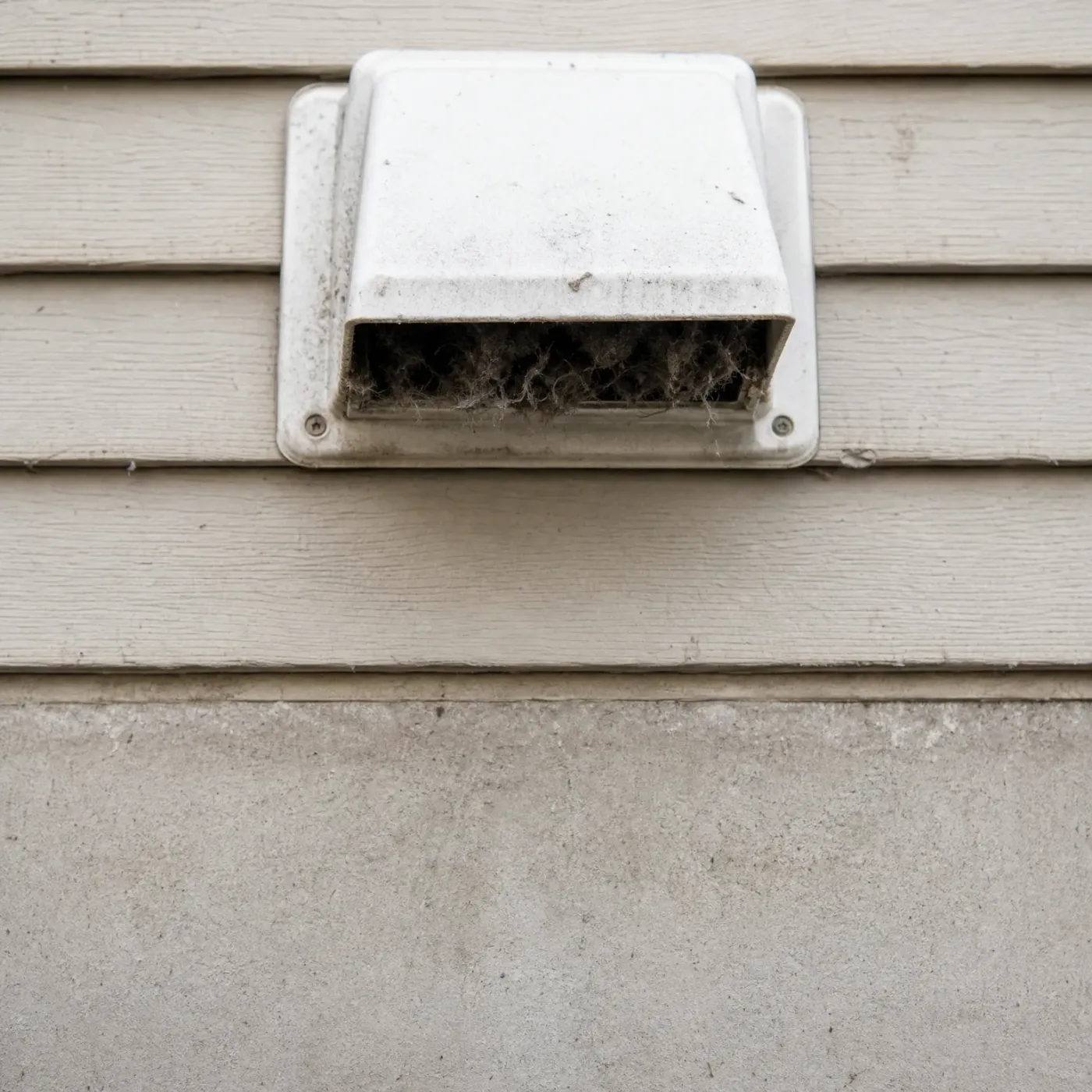
A white plastic dryer vent hood clogged with grey lint, mounted on beige horizontal lap siding above a concrete foundation wall.

Vent packed with lint and nesting

Lint has built up thick around the opening, held in place by material a bird packed in. The flap can't sit flush anymore. Air that should vent outside is backing up into the duct instead.

Will the bird come back once the nest is removed?

Once the nesting material is out, it's a fair question whether the bird just starts over. House sparrows and starlings are persistent, and if the same vent looks like a good spot again, they'll try it again. You're not just asking about this one cleanup, you're asking whether you'll be back here in a few weeks dealing with the same mess.

Not if the vent gets a guard the bird can't get through

A cleared vent with nothing changed on the outside is still an open invitation. The same flap that let the bird in the first time will let it in again, especially if it already treated that spot as home for a season. A contractor can fit a guard over the hood, usually a screen or cage built for exterior vents, that still lets exhaust out freely but keeps birds from getting a foothold on the flap. That's the difference between a one-time cleanout and one that holds. Without it, spring in Cumberland County brings the same search for shelter every year, and a vent that worked once will get tried again.

A woman wrapped in a chunky knit blanket sits in an armchair with an open book on her lap, beside a lit table lamp and a window with frost and snow outside.
A smiling older woman with gray shoulder-length hair in a cream cable-knit turtleneck sweater stands behind a wooden board holding a round loaf of bread, in a warmly lit kitchen with a dark window and shelves behind her.

A blocked vent, dealt with

  • A bird's nest in your dryer vent blocks the duct and sends hot, damp exhaust back toward the dryer instead of outside.
  • A vent cleared early, before the nest is packed tight, is a quick fix compared to one left through a full laundry week.
  • A contractor opening the duct at both ends can confirm the nest is fully out, not just pushed further down the line.
  • Once the duct is clear, a flap that closes all the way is what keeps the next bird from trying the same spot.
  • Your dryer running most days in Cumberland County means a blocked vent gets worse fast rather than sitting unnoticed.
  • Sending the form hands off the search for a contractor, so finding one stops being something you have to track down yourself.

A bird's nest in a dryer vent is a mechanical problem before it's anything else. The duct has one job, moving hot, damp air out of the house, and packed nesting material stops that. Caught early, it's a short job: the material hasn't compacted yet, and a contractor can clear it from both ends without much trouble. Left through a week or two of regular laundry, with a household running the dryer most days the way Cumberland County households do, lint keeps building against what's already there, and the job gets longer. Opening the duct at both ends matters because a nest pushed from one side alone can just pack tighter further down, looking cleared when it isn't. A contractor checking the full run with a camera or probe confirms it's actually out. The flap matters just as much once the duct is clear. If it doesn't close all the way and hang flush against the siding, the vent looks like the same opening to the next bird working through the neighborhood in spring. None of this is something to track down and manage piece by piece. Sending the form is the point where that work stops being yours. A contractor gets matched to the job and reaches out, and from there it's their equipment and their eyes on the duct, not another thing on your list to chase down.

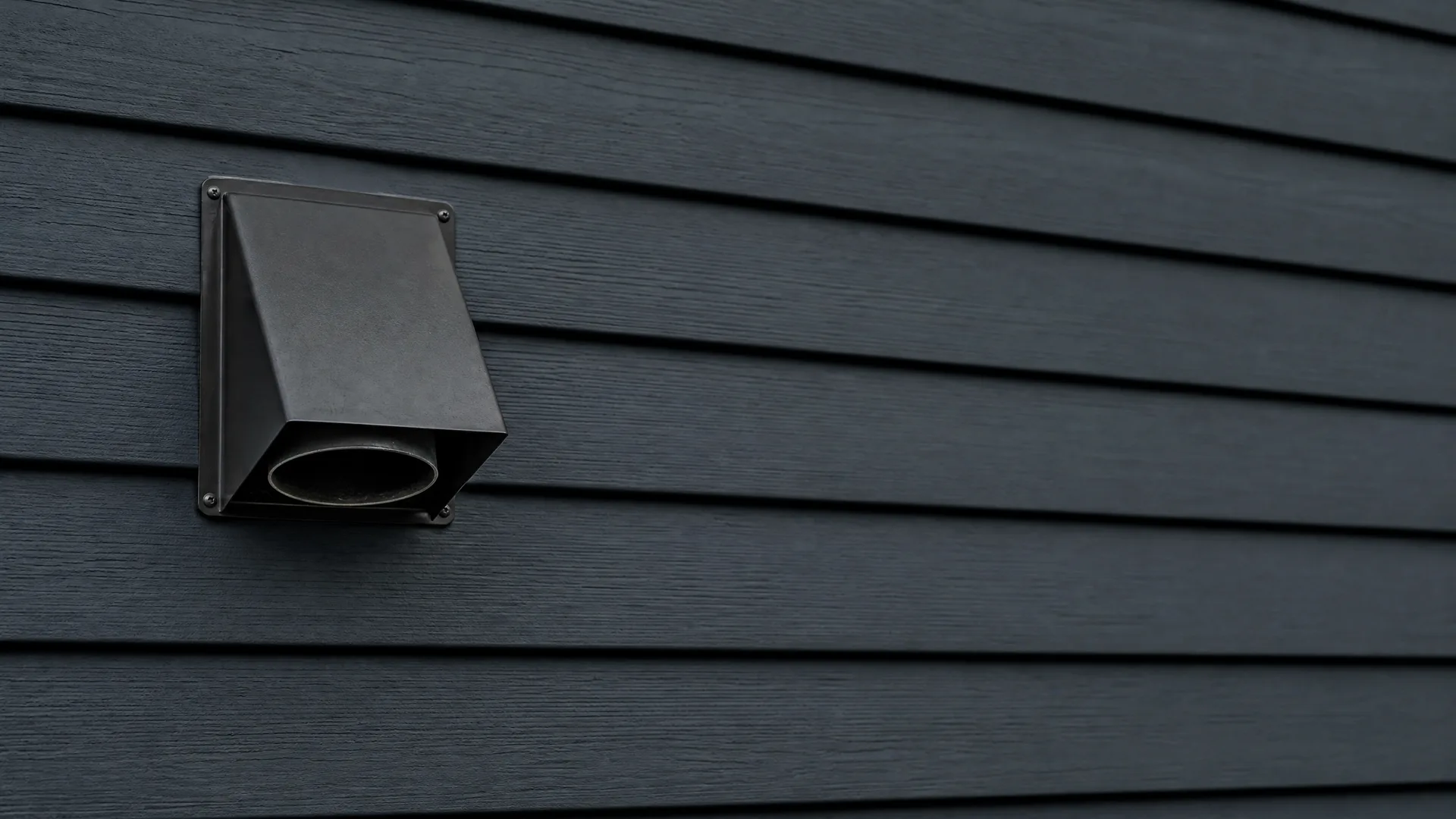
A dark grey hooded vent cover with a round downward-facing opening mounted on a dark grey horizontal lap siding wall.

A pro who works on dryer vents

After you send the request, you're done searching.

Duct and vent cleaningCumberland County, ME
Step 1 of 3

What kind of equipment?